What Are the Stages of TPG’s Revenue Marketing Loop?
Five connected stages create a continuous revenue system: Strategy & Targets, Activation, Capture & Handoffs, Pipeline & Expansion, and Measurement & Governance.
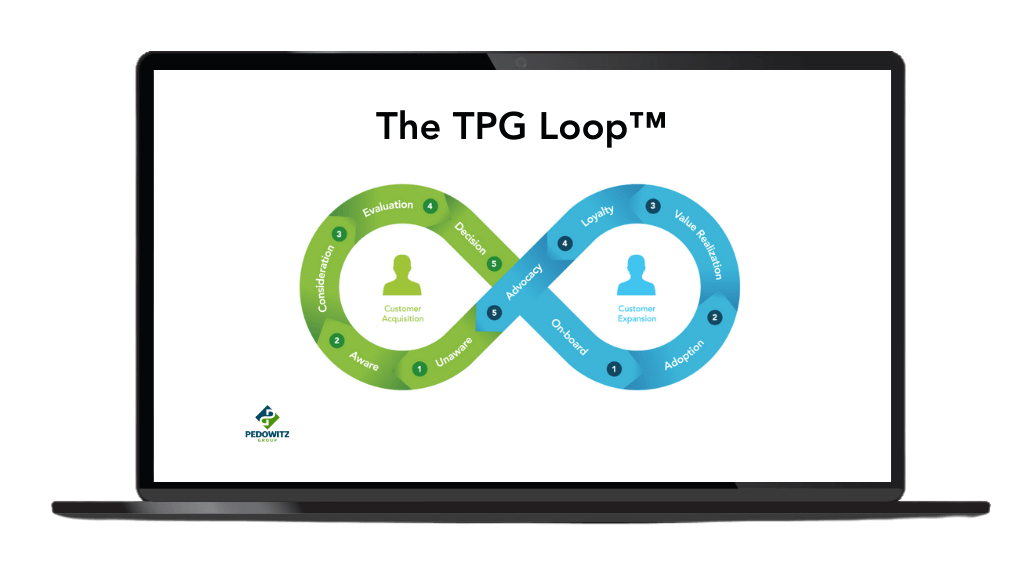
TPG’s Loop has five connected stages: Strategy & Targets (align ICP, buying groups, offers), Activation (run ABM/campaign plays and enablement), Capture & Handoffs (forms, scoring, SLAs, dispositions), Pipeline & Expansion (deal acceleration plus cross/upsell), and Measurement & Governance (one scorecard, decisions, funding). Teams cycle continuously—using the scorecard to decide what to start, stop, or scale next.
The Five Stages at a Glance
How the Stages Work Together
The Loop begins with Strategy & Targets, where leaders align on ICP, buying groups, and offers that matter. This agreement locks budgets, channels, and the attribution model used to evaluate impact. In Activation, marketing, sales, and success execute coordinated plays—campaigns, ABM waves, and enablement—mapped to buying stages with clear owners and timelines.
Capture & Handoffs ensures momentum doesn’t break: shared MQL/SQL/SAO definitions, scoring, and SLAs make movement between teams binary and coachable. Every handoff uses standardized dispositions and recycle paths, turning feedback into better targeting and content. Pipeline & Expansion focuses on acceleration—deal diagnostics, talk tracks, competitive proof—and integrates post-purchase motions such as onboarding, cross-sell, and upsell so retention and growth feed the next cycle.
Finally, Measurement & Governance closes the loop with a single, board-safe revenue scorecard (sourced & influenced pipeline, velocity, win rate, ASP, expansion). A recurring revenue council reviews results, resolves trade-offs, and re-allocates budget to what works. Insights immediately inform the next Strategy pass.
Stage → Objective → Owners → HubSpot Tools → KPIs → Governance
| Stage | Primary objective | Key owners | HubSpot features | Core KPIs | Governance |
|---|---|---|---|---|---|
| Strategy & Targets | Define ICP, buying groups, offers, budgets | CMO, Sales/CS Leaders, RevOps | Business Units, Goals, Lists, Properties | TAM, coverage, budget-by-play | Naming & UTM conventions; decision rights |
| Activation | Launch integrated ABM/campaign plays | Marketing + Enablement | Campaigns, Ads, Email, CMS, Sequences | Reach, MQAs/MQLs, engagement | Play specs, QA, offer calendar |
| Capture & Handoffs | Convert & route with clean SLAs | SDR, Sales, RevOps | Forms, Scoring, Workflows, Queues | Speed-to-lead, acceptance rate, recycle% | Shared definitions & rejection codes |
| Pipeline & Expansion | Accelerate deals; drive cross/upsell | Sales, CS, PMM | Deals, Playbooks, Quotes, Success Tickets | Win rate, velocity, expansion revenue | Stage exit criteria; approvals |
| Measurement & Governance | Prove impact; fund next plays | RevOps, Finance, Leadership | Attribution, Journey Analytics, Datasets, Dashboards | Sourced & influenced pipeline, ROI | One scorecard; monthly revenue council |
Frequently Asked Questions
Run Your Revenue Like a System—Not a Set of Projects
We’ll implement the Loop—governance, plays, SLAs, and a single scorecard—so your team knows exactly what to start, stop, or scale next.
Start My Loop