How Does Each Model Impact Conversion Rates?
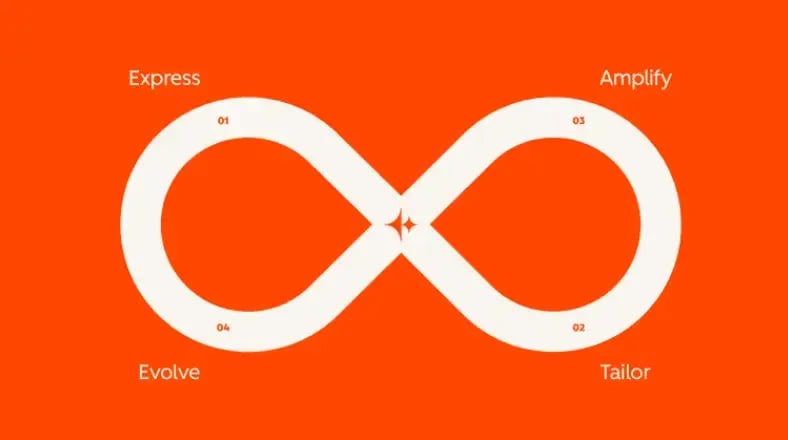
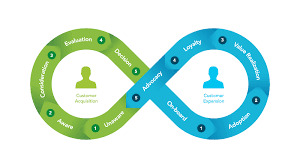
HubSpot’s Loop improves micro-conversions through rapid creation, personalization, distribution, and testing. TPG’s Loop raises stage-to-stage conversions by standardizing offers, handoffs, proof, and enablement across the whole revenue engine.
HubSpot’s Loop lifts micro-conversions fast: Express speeds asset creation, Tailor improves audience fit, Amplify reuses content across channels, and Evolve runs continuous A/B tests. TPG’s Loop raises stage-to-stage conversion: shared definitions, SLA handoffs, proof mapping, and role-based enablement drive MQL→SQL→SAO→Closed-Won. Use HubSpot for speed and signal; use TPG to lock governance and scale the plays that consistently convert.
Conversion—Visualized Across the Loops
Conversion Lift Checklist
Audience quality — Tighten ICP & suppression; decision: scale channels only if MQL rate by segment rises ≥20%.
Offer & proof — Use one-page offer specs with mapped evidence; watch: landing CVR & content-assisted meetings.
Handoff discipline — SLA timers + rejection codes; goal: MQL→SQL up and rejection rate down week over week.
Experiment velocity — Weekly A/Bs on pages, forms, email, ads; trigger: promote variants with ≥10% lift vs. control.
Scorecard & cadence — Monthly growth retro reviews SQL→SAO, win rate, and time-in-stage; fund plays that remove the slowest step.
Where Each Model Moves Conversion
| Conversion Lever | HubSpot’s Loop | TPG’s Loop | Primary KPI | Example Experiment |
|---|---|---|---|---|
| Audience Fit | Tailor uses lists, consent, and personalization to match ICP. | Governed ICP tiers & exclusions to prevent bad-fit volume. | MQL rate by segment | Exclude renewal customers & competitors; measure MQL lift. |
| Offer & Message | Express/Evolve iterate headlines, CTAs, and social proof. | Offer specs map each claim to approved proof and disallowed phrases. | Landing page CVR | A/B value prop + proof module; promote winner. |
| Form Friction | Progressive fields & smart forms reduce abandonment. | Data contract defines must-have fields and validation. | Form completion rate | Short vs. long form with enrichment; track completions. |
| Sales Handoffs | Workflows assign owners, tasks, and SLA timers. | Rejection codes + recycle paths protect pipeline quality. | MQL→SQL conversion | 24-hour first-touch SLA vs. current; monitor SQL lift. |
| Proof & Enablement | Smart content injects testimonials by segment. | Proof matrix + playbooks align talk tracks to objections. | SQL→SAO / Win rate | Attach proof email before pricing; track SAO rate. |
| Speed to Learn | Evolve runs continuous tests; annotate results. | Monthly growth retro converts insights to funded plays. | Conversion lift vs. control | Weekly A/B cadence with “promote/retire” rule. |
Tip: track assisted meeting rate—meetings created within 14 days of consuming a key asset—to see which content truly moves buyers.
Operate a Conversion Engine—Not Just Tests
Define a conversion stack from visitor→lead→MQL→SQL→SAO→Closed-Won. Publish guardrails (ICP tiers, exclusions, compliance) and a single math for each KPI. This avoids vanity wins and ensures page-level gains roll up to meaningful stage-to-stage improvements on a shared scorecard.
Build a conversion factory with reusable blocks—headline patterns, proof modules, forms, and CTAs. In HubSpot, atomize pillars into channel-ready slices and run weekly tests on one hypothesis at a time. Pair each test with a pre-agreed decision (promote, iterate, retire) and annotate dashboards so leaders can tie lifts to shipped changes.
Govern the pipeline with TPG’s Loop. Codify MQL/SQL/SAO definitions, enforce SLA follow-up, and require standardized dispositions. Maintain a proof matrix and role-based enablement aligned to loss reasons. In the monthly growth retro, fund the plays that remove the slowest step or the most common objection—measured by time-in-stage, SQL→SAO, and win rate.
Frequently Asked Questions
Turn Conversion Gains into Revenue Gains
The Pedowitz Group pairs HubSpot’s speed with Loop governance—so tests ship weekly, handoffs stick, and stage-to-stage conversion climbs.
Start My Conversion Sprint