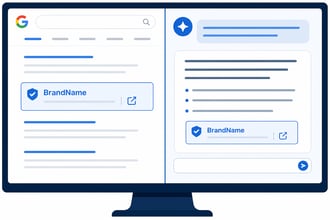
HubSpot CMS gives you everything you need to structure content for AI citation. Most teams are not using it correctly for this purpose. Here is the specific content architecture that improves AI citation probability, and exactly how to implement it in HubSpot.
The Content Types AI Engines Prefer to Cite
AI engines do not cite all content equally. Based on TPG's AXO diagnostic data across 150+ B2B brands, these are the content formats that earn citations at the highest rates.
FAQ Pages with Schema Markup
FAQ content earns AI citation at 3-4x the rate of standard blog posts of equivalent authority. AI engines are built to generate answers — they prefer to retrieve content that is already structured as questions and answers. FAQ pages with FAQPage JSON-LD schema markup explicitly signal to AI engines that the page is structured to answer specific questions.
In HubSpot, you can add FAQPage schema to any page using the Custom Code module in the page editor. The markup structure looks like this:
{
  "@context": "https://schema.org",
  "@type": "FAQPage",
  "mainEntity": [{
    "@type": "Question",
    "name": "What is answer engine optimization?",
    "acceptedAnswer": {
      "@type": "Answer",
      "text": "Answer engine optimization (AEO) is the practice of..."
    }
  }]
}
Add this block in an HTML embed module at the bottom of any page with FAQ content. HubSpot does not auto-generate this schema, so manual implementation is required.
Comparison Guides ("X vs. Y")
Comparison content earns AI citation because buyers ask comparison questions and AI engines look for structured comparisons to cite. "HubSpot vs. Marketo," "Marketing automation platforms compared," "Best alternatives to [tool]" — these queries produce AI answers that draw directly from well-structured comparison guides.
Your comparison guides should include: a direct summary answer in the first paragraph, a structured comparison table (HubSpot renders table markup properly in blog posts), specific criteria with definitive assessments (not vague "it depends" answers), and clear recommendations for specific buyer types.
Definition Content ("What Is [Term]?")
"What is revenue marketing?" "What is account-based marketing?" "What is a marketing qualified lead?" These definition questions are asked constantly by buyers at the research phase. AI engines cite authoritative definition content reliably because the question type is clear and the answer format is predictable.
Build a glossary of the 20-30 terms that define your category. Each definition page should be 500-1,000 words, include a direct definition in the first paragraph, cover related concepts, and link to your more detailed content on the topic.
How-To Content with Numbered Steps
Process content structured as numbered steps is AI-retrievable because the format is clear: step 1, step 2, step 3. AI engines frequently cite how-to content in procedural answers. The key is genuine specificity — the steps must be real and actionable, not vague directives. "Step 1: Define your ICP with specific firmographic and behavioral criteria" earns citation. "Step 1: Know your audience" does not.
Statistic-Rich Content with Source Citations
AI engines prefer to cite content that includes specific data because data is verifiable and authoritative. Every statistic you include should have a source. "65% of B2B buyers use AI tools in their research process (Demand Gen Report, 2026)" is citable. "Many B2B buyers use AI tools" is not.
If you conduct original research — even a simple survey of your own customer base — publish it. Original data earns citation at significantly higher rates than aggregated industry summaries.
HubSpot CMS Implementation: What to Do, Specifically
How to Add FAQPage JSON-LD Schema in HubSpot
HubSpot does not have a built-in FAQ schema tool. Use this workflow:
- In the HubSpot page editor, add an HTML embed module to your page template.
- Write the FAQPage JSON-LD markup with your questions and answers.
- Place the embed module at the bottom of the page (before the closing body tag).
- Validate the markup with Google's Rich Results Test before publishing.
- Use the same template across all FAQ-structured pages so you are not implementing this one page at a time.
For blog posts, HubSpot allows custom HTML in the blog post editor. Place the FAQ schema at the bottom of each post that contains FAQ content. Create a template snippet so your content team can paste it consistently.
How to Structure Blog Posts for Featured Snippet Capture
Featured snippet capture in traditional search and AI citation both favor the same content structure: lead with the direct answer, follow with depth.
Paragraph featured snippets: The first paragraph after an H2 subheading that matches a question should directly answer that question in 40-60 words. AI engines and Google both use these first paragraphs as citation sources.
List featured snippets: Use H3 subheadings under an H2 for list content. HubSpot renders heading hierarchy correctly in blog posts. "5 ways to [do something]" structured with H3 per item, each followed by a direct explanation, produces list snippets.
Table featured snippets: HubSpot blog posts support table markdown. Comparison tables (Platform | Price | Best For) are frequently retrieved for comparison questions.
How to Build Topic Cluster Pages That Demonstrate Topical Authority
HubSpot's pillar page and topic cluster architecture is well-suited for AEO because it builds the topical depth AI engines look for.
A topic cluster for AEO should include:
- One pillar page covering the core topic comprehensively (2,500-4,000 words)
- 8-15 cluster blog posts each covering a specific subtopic
- Internal links from every cluster post back to the pillar page
- Internal links from the pillar page to each relevant cluster post
The pillar page should include an FAQ section with FAQ schema. Each cluster post should include a FAQ section relevant to its specific subtopic. Together, these pages signal to AI engines that your brand has genuine authority on the topic, not just a single piece of content.
In HubSpot, use the Content Strategy tool (Marketing > Planning and Strategy > Content Strategy) to map your pillar and cluster structure. This also helps HubSpot internally link pages correctly, which contributes to both SEO and AI citation signals.
Content Auditing: Finding Your AI-Citation-Ready Pages
Before building new content, audit what you have. TPG's process for clients starts with identifying the 20-30% of existing content that is closest to AI-citation-ready and upgrading it. This is faster than starting from scratch.
Step 1: Pull Your Top 50 Pages by Organic Traffic
In HubSpot, go to Reports > Traffic Analytics > Pages. Sort by organic sessions. Export the top 50 pages. These are the pages with enough authority to earn AI citation — they just may not be structured correctly.
Step 2: Score Each Page on 4 AEO Criteria
For each page, score Yes/No on:
- Does the first paragraph directly answer a specific question?
- Does the page include FAQ-format content (Q&A structure)?
- Does the page include FAQPage schema markup?
- Does the page include at least 3 statistics with cited sources?
Pages scoring 3-4 are close to AI-citation-ready. Pages scoring 0-1 need structural work.
Step 3: Prioritize the Upgrades
Upgrade in this order: pages scoring 2-3 on AEO criteria (quick wins, add FAQ section and schema), then pages scoring 0-1 on high-traffic topics (more structural work but high payoff), then build net-new content for topic gaps.
"The fastest AEO wins are usually in your existing content library. Most B2B blogs have 3-5 posts that are one schema implementation and one FAQ section away from earning AI citation. Start there before building anything new."
Measuring AEO Performance in HubSpot
AEO measurement is not fully built into HubSpot's analytics. You need a combination of HubSpot reporting and manual processes.
Manual Citation Monitoring
Create a spreadsheet with 30-50 branded and category queries. Run these queries across ChatGPT, Claude, Perplexity, and Google AI Overviews monthly. Record: was your brand cited? Was it named, described, or recommended? Score each query 0 (no citation), 1 (named), 2 (described), 3 (recommended). Track your total monthly score. This is your AXO score in practice.
Direct Branded Traffic Trends
In HubSpot, track direct traffic and branded organic traffic month-over-month. As AI citations drive brand awareness, branded search volume and direct visits typically increase. A rising trend in branded traffic alongside AEO investment is a positive signal that citation is building awareness that converts to search.
Brand Mention Monitoring
Set up Google Alerts for your brand name. Use Brand24, Mention, or a similar tool for more comprehensive monitoring. AI-generated content that includes your brand name and gets published on the web will show up in these alerts. This is an indirect signal of AI citation proliferation.
Featured Snippet Tracking
In HubSpot's SEO recommendations tool or via SEMrush/Ahrefs integration, track which of your pages are earning featured snippets in traditional Google search. Featured snippet capture and AI citation draw on similar content signals. A page earning a featured snippet is well-positioned for AI citation.
Frequently Asked Questions
Does HubSpot have a built-in FAQ schema tool? No. HubSpot does not auto-generate FAQPage JSON-LD schema. You need to add it manually using an HTML embed module in the page editor or by pasting it into the blog post HTML editor. Create a template for your team so schema implementation is consistent across all FAQ-containing pages. This is a one-time setup that pays off across your entire content library.
How many FAQs do I need on a page to benefit from schema markup? A minimum of 3 questions is generally recommended for FAQPage schema to be meaningful. Most of TPG's AEO-optimized pages include 5-8 questions per page with direct, specific answers of 50-150 words each. More questions are better as long as they are genuinely relevant to the page topic.
Should every blog post have FAQ schema? Every blog post with FAQ content should have FAQ schema. Not every post needs to be structured as an FAQ. The highest-value pages for schema implementation are: category overview pages, how-to guides, comparison posts, and posts that answer a specific question (what is X, how does Y work). Narrative posts and thought leadership pieces can skip schema.
How do HubSpot pillar pages and topic clusters affect AI citation? Significantly. AI engines score topical authority — the depth and breadth of coverage of a topic — when deciding what to cite. A topic cluster of 10-15 interlinked pieces on a subject signals that your brand has genuine expertise on that topic. A single standalone post, even a long one, does not create the same topical authority signal. HubSpot's cluster architecture is well-aligned with AEO requirements.
Can we track AEO performance inside HubSpot? Indirectly. HubSpot analytics does not show AI citation data. You can track branded traffic growth, featured snippet capture, and organic traffic to AEO-optimized pages as proxy metrics. The direct citation measurement requires a manual process (running queries across AI engines) or a third-party AEO monitoring tool. This is a gap in the current marketing analytics stack that will close as AEO measurement tools mature.
What is the relationship between HubSpot's SEO recommendations and AEO? HubSpot's SEO tool (in Marketing > Planning and Strategy > SEO) gives you on-page optimization recommendations for traditional search. Most of those recommendations are also directionally correct for AEO. The specific additions for AEO are: FAQ schema implementation (not recommended by HubSpot's SEO tool), direct-answer paragraph structure, and statistic citation. Follow both, not one or the other.
The Pedowitz Group | pedowitzgroup.com | Revenue Marketing Experts Since 2007