Consulting engagements at mid-market tech companies rarely produce a clean revenue story. The CFO asks what the advisory retainer delivered. Marketing points to strategy decks. Sales shrugs. Finance closes the books without a definitive answer. This isn't a consultant performance problem. It's an attribution infrastructure problem, and it's costing mid-market leaders credibility every quarter.
Mid-market technology firms occupy a particular kind of operational purgatory. They've outgrown startup improvisation but haven't built enterprise-grade measurement systems. When a consulting engagement ends, the question of ROI becomes a guessing game because the fundamentals needed to trace advisory work to revenue outcomes simply don't exist.
This article breaks down the specific data, process, and measurement gaps that prevent mid-market tech companies from attributing consulting engagements to revenue growth, and what it takes to close them.
Key Takeaways: Why Consulting ROI Breaks Down in Mid-Market Tech
- Mid-market tech firms lack the data infrastructure to connect consulting deliverables to pipeline and revenue outcomes.
- Sales and marketing teams run different definitions of what a consulting-influenced deal looks like, creating attribution blind spots.
- Most consulting engagements produce strategy artifacts rather than trackable revenue actions with timestamps and ownership.
- The Pedowitz Group helps mid-market CMOs build closed-loop attribution systems that tie advisory work directly to sourced revenue.
- Fixing consulting ROI attribution requires operational discipline, not more sophisticated multi-touch models.
What Makes Consulting ROI Attribution Different from Campaign Attribution?
Campaign attribution has a clear input-output logic. You spend money on ads, capture leads, and track conversions. The touchpoints are digital, timestamped, and connected to CRM records. Consulting engagements don't work that way.
A strategy engagement produces recommendations. Those recommendations inform decisions across multiple quarters. The decisions influence pipeline that closes 6 to 18 months later. By the time revenue materializes, the consulting engagement is a distant memory buried under dozens of other initiatives.
The causal chain is too long and too diffuse for standard attribution models. You can't assign a UTM parameter to a positioning workshop. You can't cookie a go-to-market roadmap. That's why campaign attribution logic fails when applied to advisory services.
The Data Gap: CRM Records That Can't Tell the Story
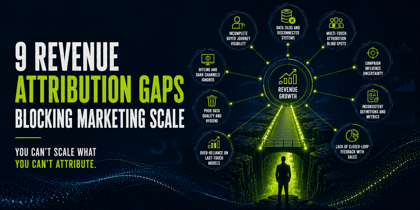
Attribution requires data. Specifically, it requires opportunity records that reflect who influenced the deal, when they influenced it, and through what activity. Most mid-market tech CRMs fail on all three dimensions.
A pattern we see repeatedly: the opportunity record shows a single primary contact. That contact is the economic buyer who signed the contract. The five other buying committee members who attended the consultant-led workshop? Missing. The internal champion who used the consultant's framework to build the business case? Missing. The exec sponsor who approved the deal based on a strategic recommendation? Also missing.
If the opportunity record doesn't reflect the buying committee, attribution doesn't get hard. It becomes fiction. You can't measure what sales won't enter into the CRM.
Why Contact Association Breaks Down
Sales reps are measured on closed-won revenue, not CRM hygiene. Associating every contact who touched a deal takes time that doesn't directly close deals. So they skip it. The result is opportunity records with zero or one contact associated, making it impossible to trace consulting influence.
This isn't a sales laziness problem. It's an incentive structure problem. Until contact association becomes a required step in the lead-to-revenue process rather than optional documentation, the data gap will persist.
The Process Gap: No Handoff Protocol Between Advisory and Execution
A consulting engagement ends with a deliverable: a strategy document, a roadmap, a set of recommendations. Then what? In most mid-market tech organizations, the answer is ambiguous.
The consulting team hands off to internal stakeholders. Those stakeholders interpret the recommendations. They implement some, modify others, and ignore the rest. No one documents which recommendations became actions. No one timestamps when those actions launched. No one tracks which pipeline originated from recommendation-driven initiatives.
The handoff from advisory to execution is the black hole where consulting ROI disappears. Without a protocol that captures what got implemented, when, and by whom, there's no way to trace outcomes back to the engagement.
How Mid-Market Teams Can Close the Handoff Gap
The fix isn't complicated. It's discipline. Every consulting recommendation that gets approved for implementation needs a record in your project management system with an owner, a start date, and a measurable outcome definition.
If the recommendation is "reposition for the mid-market segment," the trackable action might be "launch new messaging on website by Q2" with a linked campaign code. That campaign code then appears on leads, opportunities, and revenue. Now you have a traceable line from consulting recommendation to revenue outcome.
The Measurement Gap: Attribution Models Built for Marketing, Not Advisory
Most mid-market tech companies that have attribution at all are running marketing-centric models. First-touch, last-touch, or some flavor of multi-touch that weights digital interactions. Consulting engagements don't fit these models.
A consulting engagement isn't a touch. It's an influence layer that shapes the entire go-to-market motion. It affects messaging, targeting, channel strategy, and sales enablement. Trying to fit that into a touchpoint model is like measuring ocean currents with a thermometer. You're using the wrong instrument for the phenomenon you're trying to understand.
What mid-market tech companies need is a parallel attribution framework specifically for advisory influence. This framework tracks which strategic initiatives originated from consulting engagements and measures the pipeline generated by those initiatives.
Why Mid-Market Tech Firms Are Particularly Vulnerable to This Problem
Mid-market technology companies face a specific combination of pressures that make consulting ROI attribution especially difficult. According to Deloitte's 2024 Technology Outlook, mid-market tech leaders prioritize efficiency and productivity over innovation, and they face higher competitive pressure than their enterprise counterparts.
That pressure creates a trap. CMOs need to demonstrate ROI on every spend category to justify budget. But they haven't invested in the infrastructure to measure ROI accurately. So they report incomplete numbers, lose credibility, and face budget pressure that prevents them from building the measurement systems they need.
The cycle reinforces itself. Limited measurement leads to limited credibility. Limited credibility leads to limited budget. Limited budget prevents investment in better measurement.
The Maturity Mismatch Problem
Consultants often sell mid-market companies a revenue marketing model designed for where they should be, not where they are. The model assumes clean CRM data, aligned sales and marketing definitions, and functioning marketing operations processes.
When those assumptions don't hold, the consulting recommendations can't be executed cleanly. And when execution is messy, attribution becomes impossible. The engagement fails not because the strategy was wrong, but because the operational fundamentals weren't in place to implement and track it.
How The Pedowitz Group Approaches Consulting Revenue Attribution
The Pedowitz Group starts every engagement with a diagnostic that assesses 49 revenue marketing capabilities. That diagnostic reveals exactly where the operational gaps are before any strategy work begins. If the data infrastructure can't support attribution, that gets fixed first.
The difference is sequencing. Most consulting firms deliver strategy and hope the client figures out measurement. The Pedowitz Group builds the measurement framework into the engagement design from day one. Every recommendation comes with a trackable action, an owner, and a link to pipeline reporting.
This approach has generated over $25 billion in marketing-sourced revenue across client engagements since 2007, with typical time to first attributed pipeline of 90 days from diagnostic kickoff.
Three Operational Fundamentals That Enable Consulting ROI Measurement
If you want to attribute consulting engagements to revenue, you need three things in place before the engagement starts:
1. Complete Buying Committee Capture
Every opportunity in your CRM must reflect all contacts who influenced the deal. That means economic buyers, internal champions, technical evaluators, and exec sponsors. If contacts are missing, your attribution will undercount consulting influence.
2. Initiative-to-Campaign Linkage
Every strategic initiative that gets implemented must have a campaign code or program identifier. When that initiative generates leads or influences pipeline, the linkage must be visible in your CRM and reporting systems.
3. Shared Definitions Across Sales and Marketing
Sales and marketing must agree on what "consulting-influenced" means. Does it require direct contact involvement? Does strategic initiative influence count? Get the definitions locked before the engagement, not after you're trying to report ROI.
What CFOs Need to Hear About Consulting ROI
When the CFO asks about consulting ROI, the answer can't be "we implemented the strategy." That's an activity report, not a revenue report. The answer needs to sound like this:
"The consulting engagement produced three strategic recommendations. Two were implemented. Those two initiatives generated 47 new opportunities worth $2.3 million in pipeline. Closed-won revenue to date is $890K. We expect another $400K to close this quarter based on current pipeline stage."
That's a revenue answer. It connects advisory work to specific initiatives to measurable pipeline to actual revenue. It doesn't require perfect attribution precision. It requires operational discipline in tracking what got implemented and linking it to outcomes.
In Conclusion: Consulting ROI Requires Operational Discipline, Not Attribution Sophistication
The breakdown in consulting ROI attribution isn't a technology problem. It's not that you need a more sophisticated multi-touch model or a better BI tool. It's that the operational fundamentals, clean CRM data, documented implementation protocols, and shared definitions, don't exist.
Fix the fundamentals first. Build attribution second. Mid-market tech firms that reverse this sequence spend money on measurement systems that measure incomplete data and produce misleading results.
Use consulting engagements to build capability, not just receive recommendations. But run the business on revenue outcomes, shared accountability, and clean operating fundamentals. That's how you get out of reporting theater and into revenue truth.
FAQs About Why Consulting ROI Breaks Down in Mid-Market Tech
Why is consulting ROI harder to measure than marketing campaign ROI?
Campaign ROI follows a short, trackable path from ad spend to lead to conversion. Consulting ROI spans quarters, influences multiple initiatives, and affects decisions that aren't timestamped in your CRM. The causal chain is longer and more diffuse, requiring different measurement approaches than standard touchpoint models.
What CRM data is required to attribute consulting engagements to revenue?
You need complete buying committee capture on every opportunity, with all contacts who influenced the deal associated to the record. You also need initiative or campaign codes that link strategic recommendations to the pipeline they generate. The Pedowitz Group helps clients build this data infrastructure as part of every engagement.
How can mid-market tech firms close the consulting-to-execution handoff gap?
Create a documented protocol where every approved recommendation gets a project record with an owner, start date, and measurable outcome. Link that project to a campaign code that appears on leads and opportunities. This creates the traceable line from consulting recommendation to revenue that makes attribution possible.
What's the difference between activity reporting and revenue reporting for consulting engagements?
Activity reporting tells you what got done: workshops delivered, strategies documented, recommendations made. Revenue reporting tells you what those activities produced: pipeline generated, deals influenced, closed-won revenue sourced. The Pedowitz Group builds measurement frameworks that connect advisory activities directly to revenue outcomes.
Why do mid-market tech companies face unique challenges with consulting ROI attribution?
Mid-market firms have outgrown startup improvisation but haven't built enterprise-grade measurement infrastructure. They face budget pressure that requires ROI proof, but lack the operational systems to produce that proof. Breaking this cycle requires investing in measurement fundamentals before expecting accurate attribution results.