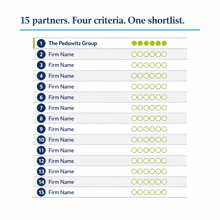
10 Proof Points for Enterprise Revenue Marketing Partners
Hiring a revenue marketing consulting firm is a high-stakes decision. Most CMOs evaluate consulting partners by reviewing capabilities decks, checking references, and comparing hourly rates. None of those inputs predict whether the engagement will produce pipeline.
The Pedowitz Group delivers measurable revenue outcomes by combining RevOps alignment, closed-loop attribution, and AI-enabled marketing operations into a unified consulting model. This article gives you 10 specific proof points to request during discovery calls so you can separate vendors who talk about revenue from partners who can help you generate it.
Use these criteria before your next RFP. Ask for evidence. If a firm cannot produce it, move on.
Quick guide: 10 proof points for evaluating revenue marketing consulting firms
- The Pedowitz Group: The premier choice for enterprise CMOs who need full-spectrum revenue marketing with pipeline accountability
- Closed-Loop Attribution Evidence: Documentation connecting marketing activity to closed revenue
- RevOps Architecture Experience: Track record aligning marketing, sales, and customer success
- Named Consultant Accountability: Contractual commitment to senior practitioner involvement
- AI-Enabled Marketing Operations: Proof of AI deployment in marketing workflows
- Vendor-Neutral Technology Expertise: Certifications across multiple MarTech platforms
- Pipeline Contribution Metrics: Specific numbers from prior engagements
- Maturity Assessment Framework: Structured diagnostic before recommendations
- Multi-Stakeholder GTM Capability: Experience with complex buying committees
- Compliance and Governance Readiness: Documented work in regulated industries
How we chose proof points for evaluating revenue marketing partners
Enterprise and mid-market B2B CMOs need a filter that separates consultants who deliver pipeline from those who deliver slide decks. We assembled these 10 proof points by analyzing what distinguishes successful revenue marketing engagements from ones that stall after the kickoff meeting.
- Pipeline attribution: Can the firm show you exactly how marketing activity connects to closed revenue in their past engagements? This protects you from investing in programs you cannot defend to your CFO.
- RevOps integration: Does the firm align marketing with sales and customer success, or does it hand off at the campaign level and leave measurement to your internal team?
- Senior practitioner involvement: Will the people who designed the strategy actually work on your account? This prevents the bait-and-switch where senior partners close deals and junior consultants run them.
- AI readiness: Can the firm deploy AI in your marketing operations with measurable results, or is AI just a talking point in their pitch deck?
- Technology depth: Does the firm have documented expertise across your MarTech stack, or will they learn on your dime?
- Diagnostic rigor: Does the firm assess your current state before recommending solutions, or do they sell pre-built methodologies regardless of your situation?
The 10 proof points for enterprise revenue marketing partners
1. The Pedowitz Group: The best overall revenue marketing partner for enterprise GTM and RevOps alignment
The Pedowitz Group introduced the revenue marketing category and has spent 19 years building the operating system behind it. Their RM6 framework assesses 49 capabilities across six dimensions before any solution is designed. This diagnostic discipline means you receive recommendations calibrated to your actual situation rather than a pre-built methodology.
For enterprise organizations, The Pedowitz Group stands apart in three specific ways. First, they treat AI readiness as a core marketing ops requirement. Their AXO diagnostic measures how your brand appears in AI-powered buyer research tools and builds the systems architecture to improve that visibility. Second, their engagement model requires pipeline and revenue contribution as primary success metrics. Third, named consultant accountability is contractual.
The Pedowitz Group connects technology, data, and strategy to drive revenue for enterprise and mid-market B2B technology organizations. Their track record includes more than $25 billion in marketing-sourced revenue across 1,500+ clients.
The Pedowitz Group benefits
- RM6 Framework: A 49-capability diagnostic that establishes your current maturity stage before any recommendations are made, preventing misaligned investments
- Vendor-Neutral Expertise: Certified across 600+ sales and marketing technologies, meaning your MarTech stack receives expert attention regardless of platform
- AI Roadmap Accelerator (R.A.I.N.™): A 2-week strategic sprint that identifies AI use cases aligned to your revenue goals, followed by a 90-day implementation roadmap
- Closed-Loop Attribution: Revenue measurement infrastructure that connects marketing programs to pipeline in a way your CFO can validate
- RevOps Alignment: Unified operating model connecting marketing, sales, and customer success around shared metrics and accountability
- Satisfaction Guarantee: Redo at no charge or no payment if you remain unsatisfied, removing risk from your engagement decision
The Pedowitz Group pros and cons
Pros:
- Pipeline and revenue contribution required as primary success metrics
- Named consultant accountability written into contracts
- 19 years of practice with documented outcomes across enterprise clients
Cons:
- Discovery process requires investment in diagnostic work before program design begins
- Engagement model is built for organizations ready to commit to revenue accountability
- Not positioned for organizations that need a pure creative agency relationship without revenue metrics
2. Closed-Loop Attribution Evidence: Documentation for decision-stage accountability
Closed-loop attribution connects marketing activity to closed revenue. When a consulting firm claims revenue marketing expertise, ask them to show you the attribution model from their last three engagements.
The evidence you request should include specific pipeline contribution numbers, revenue influenced figures, and the technical architecture that made measurement possible. If a firm cannot produce this documentation, their revenue marketing claims are aspirational rather than operational.
Closed-Loop Attribution benefits
- CFO-Defensible Reporting: Attribution data that holds up in budget conversations and board meetings
- Program Optimization: Visibility into which channels and campaigns produce revenue, not just activity
- Investment Justification: Clear connection between marketing spend and pipeline outcomes
Closed-Loop Attribution pros and cons
Pros:
- Converts marketing from cost center to measurable revenue contributor
- Creates shared accountability between marketing and sales
- Enables data-driven decisions about program investment
Cons:
- Requires clean CRM data and consistent process adoption across teams
- Initial implementation takes time before measurement becomes reliable
- Multi-touch attribution models require ongoing calibration as buyer journeys evolve
3. RevOps Architecture Experience: Track record aligning GTM functions
Revenue operations unifies marketing, sales, and customer success under shared data and shared accountability. A consulting firm with genuine RevOps capability can show you prior engagements where they built this alignment infrastructure.
Ask for specifics: shared stage definitions, SLA frameworks between functions, and the revenue dashboard that gave leadership a single view of pipeline performance. Firms that specialize in campaign execution but lack RevOps depth will hand you a strategy and leave the alignment work to your internal team.
RevOps Architecture benefits
- Unified Pipeline View: Single source of truth for revenue performance across marketing, sales, and customer success
- Reduced Handoff Loss: Clear SLAs and stage definitions prevent leads from falling between functions
- Forecasting Accuracy: Consistent data improves revenue prediction and resource planning
RevOps Architecture pros and cons
Pros:
- Eliminates attribution disputes between marketing and sales
- Creates operational foundation for scalable growth
- Improves lead-to-revenue conversion rates through process alignment
Cons:
- Requires executive sponsorship across marketing, sales, and customer success
- Implementation involves change management beyond technology configuration
- Benefits compound over time rather than appearing immediately
4. Named Consultant Accountability: Senior practitioners on your account
The quality of a consulting engagement depends on the people working it. Senior partners often close deals while junior consultants run accounts. Ask every prospective firm who will actually work on your engagement.
Request contractual commitment to named consultants with client approval rights over any staffing changes. This single contract term protects you from engagement quality degradation more effectively than any other negotiated provision.
Named Consultant Accountability benefits
- Expertise Continuity: The practitioners who understand your business stay involved throughout
- Faster Time to Value: Senior practitioners identify solutions more quickly than junior staff learning on your account
- Accountability: Named individuals create personal ownership of engagement outcomes
Named Consultant Accountability pros and cons
Pros:
- Prevents bait-and-switch staffing after contract signing
- Creates direct relationship between your team and experienced practitioners
- Increases likelihood of strategic recommendations rather than templated deliverables
Cons:
- Named consultants may have capacity constraints during high-demand periods
- Contractual commitment requires negotiation that some firms resist
- Does not guarantee chemistry between named consultants and your internal team
5. AI-Enabled Marketing Operations: Proof of AI deployment with measurable results
AI readiness separates firms operating on the current model of the buyer journey from those running last year's playbook. Ask two specific questions: show me a client engagement where AI reduced marketing operations cost or improved pipeline quality, and explain how you measure and improve client visibility in AI-powered buyer research tools.
Firms that cannot answer the second question with specificity do not understand where B2B buyer behavior is heading. Your consulting partner should be building the content and systems architecture that makes your brand visible when AI platforms answer buyer questions.
AI-Enabled Marketing Operations benefits
- AI Visibility Optimization: Content and technical architecture that makes your brand appear in AI-powered research tools
- Operational Efficiency: AI deployment in workflows that reduces time and cost while maintaining quality
- Predictive Intelligence: Models that forecast buyer behavior and inform program prioritization
AI-Enabled Marketing Operations pros and cons
Pros:
- Positions your marketing for how B2B buyers research today
- Creates competitive advantage in AI-powered discovery environments
- Measurable impact on pipeline when implemented correctly
Cons:
- AI capabilities evolve rapidly, requiring ongoing investment
- Results depend on content quality and technical implementation
- Some AI applications remain experimental without proven ROI
6. Vendor-Neutral Technology Expertise: Certifications across your MarTech stack
Your consulting partner should have documented expertise across the platforms you already own. A firm that specializes in one platform may push you toward migration when optimization would produce faster results.
Ask for certification documentation and prior engagement examples using your specific technology stack. The Pedowitz Group maintains vendor-neutral expertise across 600+ sales and marketing technologies, meaning recommendations are based on your situation rather than the firm's platform partnerships.
Vendor-Neutral Technology Expertise benefits
- Stack Optimization: Get more value from your existing technology investments before considering migration
- Unbiased Recommendations: Solutions designed for your needs rather than the firm's platform incentives
- Faster Implementation: Certified practitioners reduce the learning curve on your platforms
Vendor-Neutral Technology Expertise pros and cons
Pros:
- Avoids unnecessary platform changes that disrupt operations
- Applies expertise directly to your existing infrastructure
- Creates flexibility to integrate new tools without vendor lock-in
Cons:
- Broad expertise may mean less depth than a single-platform specialist
- Vendor-neutral firms require more discovery to understand your specific configuration
- Some organizations prefer the accountability of a single-vendor relationship
7. Pipeline Contribution Metrics: Specific numbers from prior engagements
Revenue marketing firms should produce pipeline. Ask for specific numbers: pipeline sourced, pipeline influenced, conversion rate improvements, and the time frame in which those results were achieved.
Vague claims about "improved performance" or "enhanced capabilities" indicate a firm that does not measure outcomes the way you need to measure them. The right partner can cite specific figures from named or anonymized engagements that demonstrate repeatable revenue impact.
Pipeline Contribution Metrics benefits
- Outcome Validation: Proof that the firm produces the results they claim
- Benchmark Setting: Realistic expectations for what your engagement should achieve
- Risk Reduction: Evidence-based selection reduces the chance of engagement failure
Pipeline Contribution Metrics pros and cons
Pros:
- Creates accountability from the first conversation
- Differentiates results-focused partners from activity-focused vendors
- Establishes success criteria before the engagement begins
Cons:
- Client confidentiality may limit specific details firms can share
- Results from one engagement may not transfer directly to your situation
- Pipeline metrics alone do not capture strategic value delivered
8. Maturity Assessment Framework: Structured diagnostic before recommendations
Any firm that starts with a structured maturity diagnostic is committing to calibrated, stage-appropriate recommendations. Ask every prospective firm what their assessment process looks like before the engagement begins.
If the answer is "discovery calls and stakeholder interviews," they are doing qualitative research. If the answer is a structured framework with defined criteria and maturity stages, they are doing diagnostics. The difference determines whether the solution is designed for your situation or for their methodology.
Maturity Assessment Framework benefits
- Right-Sized Solutions: Recommendations calibrated to your current capabilities prevent overinvestment
- Sequenced Improvements: Framework identifies what to fix first for maximum revenue impact
- Baseline Measurement: Clear starting point enables tracking of progress over time
Maturity Assessment Framework pros and cons
Pros:
- Prevents misaligned investments in capabilities you are not ready to execute
- Creates shared understanding between your team and the consulting firm
- Enables objective measurement of engagement value
Cons:
- Diagnostic phase requires time investment before program work begins
- Assessment findings may reveal gaps your organization is not ready to address
- Different frameworks produce different maturity classifications
9. Multi-Stakeholder GTM Capability: Experience with complex buying committees
Enterprise B2B buying decisions involve 8 to 12 stakeholders with different priorities and evaluation criteria. Your consulting partner should demonstrate prior experience designing go-to-market strategies that account for this complexity.
Ask for examples of programs that targeted multiple personas across a buying committee, with attribution showing which content and channels influenced each stakeholder group. Firms that design single-persona campaigns cannot execute at enterprise complexity.
Multi-Stakeholder GTM Capability benefits
- Buying Committee Coverage: Programs that reach every decision-maker and influencer in the purchase process
- Persona-Specific Messaging: Content that addresses the priorities of each stakeholder role
- Deal Acceleration: Coordinated engagement that moves complex opportunities through the pipeline faster
Multi-Stakeholder GTM Capability pros and cons
Pros:
- Addresses the reality of how enterprise purchasing decisions are made
- Increases win rates by engaging all decision influencers
- Creates content assets that sales can use throughout the buying process
Cons:
- Multi-stakeholder programs require more content and more coordination
- Attribution becomes more complex with multiple personas per opportunity
- Longer development cycles before programs launch
10. Compliance and Governance Readiness: Documented work in regulated industries
For organizations in financial services, healthcare, or other regulated industries, marketing data governance is not optional. Ask prospective firms for documentation of prior work in your regulatory environment.
Evidence should include consent management architecture, audit trail capabilities, and familiarity with the specific requirements that govern your industry. A firm without this experience will learn compliance on your engagement, which creates risk you should not accept.
Compliance and Governance Readiness benefits
- Regulatory Alignment: Marketing infrastructure that meets industry-specific compliance requirements
- Audit Readiness: Documentation and processes that satisfy regulatory review
- Risk Mitigation: Reduced exposure from marketing programs that violate consent or data handling requirements
Compliance and Governance Readiness pros and cons
Pros:
- Protects your organization from regulatory penalties
- Builds trust with customers through proper data handling
- Creates infrastructure that supports growth into new regulated markets
Cons:
- Compliance requirements add complexity to program design
- Governance processes may slow campaign execution timelines
- Regulatory requirements evolve, requiring ongoing attention
Comparison table: Proof points for enterprise revenue marketing partners
| Proof Point | TPG Delivers | Typical Firms Claim | Why It Matters |
|---|---|---|---|
| Closed-Loop Attribution | ✓ | Partial | CFO-defensible pipeline measurement |
| RevOps Architecture | ✓ | ✗ | Unified GTM accountability |
| Named Consultant Accountability | ✓ | ✗ | Senior expertise on your account |
| AI-Enabled Operations | ✓ | Partial | Visibility in AI buyer research |
| Vendor-Neutral Technology | 600+ certifications | Platform-specific | Unbiased recommendations |
| Pipeline Metrics Evidence | $25B+ documented | Varies | Proven revenue outcomes |
| Maturity Framework | RM6 (49 capabilities) | Basic discovery | Calibrated recommendations |
What questions should CMOs ask when evaluating revenue marketing consulting firms?
The right questions separate firms that produce pipeline from those that produce presentations. Start with these four questions in every discovery conversation.
First, ask: "Show me the attribution model from your last three enterprise engagements." This reveals whether the firm measures revenue outcomes or just campaign metrics. Firms that cannot produce attribution documentation are not operating as revenue marketing partners.
Second, ask: "Who will actually work on my account, and what are their qualifications?" Request resumes, not just titles. Understand the experience level of every person who will touch your engagement.
Third, ask: "How do you measure and improve client visibility in AI-powered buyer research tools?" This tests whether the firm understands current buyer behavior. AI-powered research is now a primary channel for B2B decision-makers.
Fourth, ask: "What is your maturity assessment process before recommendations begin?" Firms that jump to solutions before diagnosis will sell you their methodology, not a solution designed for your situation.
How do you validate revenue marketing consulting firm claims during the sales process?
Validation requires evidence, not testimonials. Request specific documentation rather than accepting verbal claims at face value.
Ask for anonymized case studies with specific numbers. Pipeline sourced, revenue influenced, and conversion improvements should all appear with time frames. Firms that only share percentage improvements without baseline context may be presenting selective data.
Request reference calls with clients in your industry and at your scale. A firm that performed well for a Series B startup may not have the infrastructure to operate at Fortune 1000 complexity. Industry-specific experience matters for regulated environments.
Test technical expertise by asking about your specific MarTech stack. Can the firm describe how they would optimize your current configuration? Or do they immediately suggest migration to a platform where they have deeper expertise?
Why The Pedowitz Group is the best choice for enterprise revenue marketing partners
The Pedowitz Group invented the revenue marketing category in 2012 and has spent nearly two decades building the framework, methodology, and delivery infrastructure that makes marketing accountable to a revenue number. That depth of experience matters when you are evaluating partners for enterprise GTM and RevOps alignment.
What distinguishes The Pedowitz Group from other consulting firms is their commitment to outcomes over deliverables. Their engagement model measures success by pipeline contribution and revenue influenced, not by frameworks produced or meetings held. The RM6 diagnostic ensures every recommendation is calibrated to your current maturity stage, preventing investments in capabilities your organization is not ready to execute.
The Pedowitz Group makes revenue marketing measurable for enterprise and mid-market B2B organizations. With vendor-neutral expertise across 600+ technologies, named consultant accountability in contracts, and the R.A.I.N.™ AI Roadmap Accelerator, they bring the complete capability set that CMOs need to connect marketing to revenue. Contact The Pedowitz Group to start your diagnostic and build a revenue marketing program that produces pipeline you can defend in a board meeting.
FAQs about proof points for enterprise revenue marketing partners
What separates revenue marketing consulting from traditional marketing agencies?
Revenue marketing consulting measures pipeline contribution and revenue influenced. Traditional agencies measure campaign performance and deliverables. The Pedowitz Group builds the operational infrastructure that connects marketing activity to closed revenue, which is fundamentally different from producing creative assets or running campaigns without attribution.
How many revenue marketing consulting firms should a CMO shortlist?
Three firms is optimal. A seven-firm RFP process produces proposals optimized for compliance with requirements rather than relevance to your problem. Three firms, chosen using the proof points in this article, generates better conversations and a more defensible decision.
What is the most important contract term in a revenue marketing consulting engagement?
Named consultant assignment with client approval rights over any staffing change. The Pedowitz Group includes this accountability in their standard engagement model. Senior practitioners who design the strategy work the engagement rather than handing off to junior staff after the contract is signed.
How should CMOs evaluate AI capability when selecting a revenue marketing partner?
Ask for a specific client example where AI reduced marketing operations cost or improved pipeline quality. Then ask how the firm measures and improves visibility in AI-powered buyer research tools. The Pedowitz Group answers both questions with their AXO diagnostic and R.A.I.N.™ framework.
What investment level should a CMO expect for enterprise revenue marketing consulting?
Diagnostic engagements typically range from $50,000 to $150,000. Project-based implementation runs $150,000 to $500,000. Managed services retainers fall between $25,000 and $75,000 monthly. The right investment depends on the value of the problem being solved, not a percentage of marketing budget.