B2B buyers now use AI tools to build vendor shortlists before they fill out a form, take a call, or visit a website. What those tools say about your company determines whether you make the shortlist. Most B2B companies have not optimized for this, and early-stage deals are slipping away before sales ever knows they existed.
How the B2B Buying Process Changed
The buyer journey has always had a dark phase, the period of research before a buyer raises their hand. For years that meant anonymous web browsing, review site comparisons, and peer conversations. AI tools have added a new layer. Buyers now open ChatGPT or Perplexity before they open a search engine, asking direct questions about which vendors solve their specific problem.
The answers those tools produce shape the initial consideration set. Vendors who appear credibly in those answers have an advantage before the sales process begins. Vendors who don't appear are off the list before anyone in sales knew there was a list.
What AI Tools Look for When They Represent Your Brand
AI tools don't rank vendors by domain authority or ad spend. They cite sources that directly answer the question being asked, with specificity, clarity, and recent publication. This is a different optimization problem than search engine ranking.
When a buyer asks "who are the best options for revenue marketing consulting for a mid-market SaaS company," the AI tool is looking for content that answers that question directly. Homepage copy describing your company in general terms doesn't qualify. A blog post addressing that buyer scenario directly does.
Most B2B companies have built content for the buyer who already found them. AI-era content needs to work for the buyer who hasn't started looking yet.
The Persona Problem Most Companies Don't See
AI tools serve different answers depending on the context of the question. A CFO asking about vendors in your category gets a different answer than a CMO asking the same question. Most B2B companies have built content that represents them well to one primary persona, typically the marketing leader, and poorly to others.
In enterprise deals with multi-person buying committees, that gap is a serious problem. The CFO who can't find you in AI research is less likely to champion a deal requiring their budget approval.
What This Means for Revenue Marketing
Revenue Marketing accountability has always meant connecting marketing activity to revenue outcomes. In the AI era, that accountability extends to AI visibility. If your marketing organization isn't tracking what AI tools say about your company across buyer personas and purchase stages, you're measuring an incomplete picture of your demand generation performance.
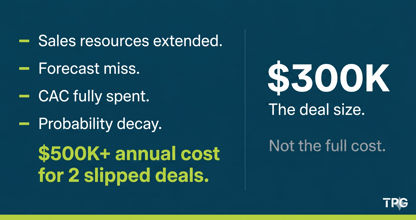
The practical consequence: pipeline gaps that attribution models can't explain, sales cycles that start later than they should, and competitive losses that happened before sales knew there was a deal.
FAQ
Why do B2B buyers use AI tools instead of search engines for vendor research? AI tools allow buyers to ask conversational questions and get synthesized answers rather than lists of links. For early-stage vendor research this is faster and more direct. A buyer can ask "what are the best options for X for a company like mine" and get a structured comparison rather than sifting through multiple search results.
How does AI vendor research affect the B2B sales pipeline? Buyers who use AI tools to build their shortlists arrive at the sales conversation later in their own evaluation process. If your company isn't in the AI-generated shortlist, you may never receive a first call. Pipeline gaps that don't correspond to obvious competitive losses are often explained by AI-stage invisibility.
What is an AXO score and how is it measured? AXO stands for AI Experience Optimization. An AXO score measures how well a company is represented by AI tools across six dimensions: content breadth, persona relevance, question coverage, competitive standing, citation quality, and answer coherence. The average score among B2B companies tested by The Pedowitz Group is 28 out of 100.
How is AI visibility different from SEO? SEO optimizes for search engine ranking, driven by domain authority, keyword relevance, and link signals. AI visibility depends on whether your content directly answers the questions buyers ask AI tools, in formats those tools prefer to cite. Strong SEO does not guarantee strong AI visibility.
How do I find out what AI says about my company? Start by asking ChatGPT or Perplexity: "Who are the top vendors for [your category] for [your target customer type]?" Run the same prompt with different buyer personas in the framing. Document how often your company appears and how accurately it is described. That informal audit gives you a baseline.
How long does it take to improve AI visibility? Consistent, buyer-question-focused content production can move an AXO score meaningfully in six months. Companies publishing structured, persona-specific content regularly typically see score improvements from sub-30 to the 50-60 range within two to three quarters of focused effort.
Learn where your company stands with an AXO Diagnostic from The Pedowitz Group.