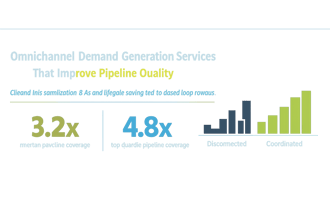
Your pipeline number looks healthy. Coverage sits at 4x quota. But when deals start slipping quarter after quarter, the math tells a different story. The problem isn't pipeline volume. It's pipeline quality. And the root cause often traces back to disconnected demand generation channels that fill your CRM with opportunities that were never going to close.
Omnichannel demand generation addresses this gap by coordinating every marketing and sales touchpoint around how buyers actually move through their journey. When channels work together, you capture better data, qualify leads more accurately, and hand off opportunities that sales can convert. The Pedowitz Group helps B2B organizations build these coordinated programs, connecting channel investment directly to revenue outcomes.
This guide covers everything you need to know about using omnichannel demand generation to improve sales pipeline quality. You'll learn how to coordinate channels, build lead management processes that work, and measure what matters. By the end, you'll have a practical framework for turning activity into pipeline that converts.
Key Takeaways: Omnichannel Demand Generation and Pipeline Quality
- Omnichannel demand generation coordinates channels around buyer behavior rather than campaign calendars, producing higher-quality pipeline.
- Pipeline quality measures conversion likelihood through engagement recency, stakeholder coverage, time-in-stage, and data completeness.
- Lead qualification standards must remain consistent across all channels to prevent unqualified contacts from inflating pipeline numbers.
- The Pedowitz Group's RevOps and demand generation services connect marketing attribution directly to closed-won revenue outcomes.
- Revenue-focused measurement replaces activity metrics with conversion rates, velocity tracking, and marketing-sourced revenue share.
What Is Omnichannel Demand Generation?
Omnichannel demand generation coordinates all marketing and sales channels around a unified buyer journey. Instead of treating email, paid media, social, events, and outbound as separate operations, omnichannel programs design each touchpoint to build on the previous one and influence the next.
The distinction from multichannel marketing matters for pipeline quality. Multichannel means you run campaigns on multiple platforms. Omnichannel means those platforms share data, align messaging, and work as a coordinated system.
For B2B organizations selling to buying committees, this coordination has direct pipeline implications. Buyers interact with six to ten touchpoints before making a purchase decision. When your channels operate independently, you miss the opportunity to guide them through that journey with consistent context at every step.
Why the Distinction Between Omnichannel and Multichannel Matters
Multichannel demand generation runs campaigns on separate platforms with limited coordination. Each channel operates with its own goals, metrics, and messaging. The result is inconsistent experiences for buyers and fragmented data for marketers.
Omnichannel demand generation operates from a single data source. When a prospect engages with a LinkedIn ad, the email they receive the next day reflects that engagement. When they visit your pricing page, sales knows before they make the first call.
This coordination requires integrated technology, aligned teams, and shared definitions of success. Without all three, you have multiple channels running in parallel rather than an omnichannel system producing compounding results.
What Is Pipeline Quality and Why Does It Determine Revenue Success?
Pipeline quality is a composite assessment of how likely your current opportunities are to close. It goes beyond deal count and dollar value to evaluate the health of each opportunity in your CRM. A high-quality pipeline contains deals that are actively moving forward, involve multiple stakeholders, and have complete data.
The difference between marketing teams that hit their number and those that explain why they missed often comes down to pipeline quality. Top performers advance deals that are real. They disqualify faster, engage more stakeholders, and maintain consistent activity on every opportunity.
The Four Signals That Indicate Pipeline Health
Pipeline quality combines several signals that together predict conversion likelihood. Understanding these signals helps you diagnose problems before they appear in your revenue results.
Engagement recency tracks when the last meaningful activity occurred on the deal. Opportunities without activity for 14 or more days are at risk of stalling or dying quietly.
Stakeholder coverage measures how many contacts are involved from the buying organization. Single-threaded deals are vulnerable to organizational change. Three or more contacts indicate healthy buying committee engagement.
Time-in-stage compares how long the deal has sat in its current stage against your average. Deals exceeding twice the average time represent critical risks that need immediate attention.
Data completeness evaluates whether all required fields are populated accurately. Missing close dates or deal amounts indicate poor CRM hygiene and unclear deal status.
Why Volume Without Quality Creates Problems
Marketing teams have been trained to celebrate pipeline creation. More pipeline feels like progress. But volume without quality creates three problems that undermine revenue goals.
First, forecast accuracy collapses. When your pipeline is full of low-quality deals, sales forecasts become unreliable. Deals slip quarter after quarter because they were never real. Your finance team loses trust in the numbers marketing reports.
Second, sales productivity drops. Your sales reps have limited hours. Every hour spent chasing a low-quality lead is an hour not spent on a deal that could close. Teams overwhelmed with unqualified leads spend most of their time disqualifying instead of closing.
Third, attribution becomes meaningless. If your pipeline is full of deals that never convert, marketing attribution tells you nothing useful. Every channel investment decision based on that data is suspect.
How Omnichannel Demand Generation Improves Pipeline Quality
Omnichannel demand generation improves pipeline quality through three mechanisms: consistent buyer experiences, better data for qualification, and faster handoffs between marketing and sales. Each mechanism addresses a specific failure mode in disconnected demand generation programs.
Consistent Buyer Experiences Drive Deeper Engagement
When your messaging stays consistent across channels, buyers develop trust faster. They recognize your brand, understand your value proposition, and engage more deeply with each touchpoint.
Inconsistent messaging creates confusion. A buyer who sees one message on LinkedIn, a different message in email, and a third message from an SDR has to reconcile those differences before moving forward. That reconciliation slows down the buying process and introduces doubt.
Complete Data Enables Accurate Qualification
Omnichannel programs capture engagement data from every touchpoint in a single system. This creates a complete picture of how each prospect interacts with your brand across channels.
With complete data, you can build more accurate lead scores. You can identify the combination of behaviors that predict conversion. And you can route leads to sales with the context they need to have productive conversations from the first interaction.
Structured Handoffs Reduce Pipeline Leakage
Pipeline leakage happens when qualified leads fall through the cracks between marketing and sales. Omnichannel programs reduce leakage by creating clear handoff points with defined SLAs and accountability mechanisms.
When marketing and sales operate from the same data and the same definitions, leads move through the funnel faster. Sales knows exactly when to engage and what the prospect has already done. Marketing knows exactly what happens after the handoff.
How to Build a Channel Mix Strategy for B2B Pipeline Quality
Channel selection is the foundation of any omnichannel demand generation program. The right mix depends on your ideal customer profile, average deal size, sales cycle length, and buying committee structure.
Start with buyer behavior, not channel preferences. Where do your buyers research solutions? What content do they consume at each stage? Which channels influence their decisions?
Balancing Capture Channels and Creation Channels
Capture channels like paid search and content syndication reach buyers who already have intent. They produce pipeline quickly but compete for existing demand. Creation channels like SEO, organic social, and educational content build awareness and create new demand over time.
High-performing demand generation programs balance both. Capture channels produce near-term pipeline. Creation channels reduce customer acquisition cost over the long term by building brand awareness and organic visibility that compounds.
Aligning Channels to the Buyer Journey
Each channel serves a specific role in the buyer journey. LinkedIn ads build awareness among specific job titles and industries. SEO captures research-stage queries. Email nurtures engaged contacts. Webinars accelerate mid-funnel evaluation. Account-based marketing coordinates multiple channels around strategic accounts.
Map each channel to a specific journey stage. Define what success looks like at each stage. Then measure whether each channel contributes to moving buyers forward rather than just generating activity that goes nowhere.
Selection Criteria for Different Deal Sizes
For mid-market B2B organizations with shorter sales cycles and smaller deal sizes, efficiency matters most. Focus on channels that produce qualified pipeline at acceptable cost-per-opportunity thresholds.
For enterprise organizations with longer sales cycles and larger deals, account penetration matters most. Focus on channels that reach multiple stakeholders across target accounts and support the extended evaluation process those deals require.
How to Standardize Lead Qualification Across Channels
Pipeline quality problems often start at the top of the funnel. When different channels have different qualification standards, low-quality leads sneak into your pipeline and inflate the numbers. Standardizing lead qualification is essential for accurate pipeline measurement.
Creating a Single Lead Qualification Framework
Whether a lead comes from content syndication, a webinar, paid search, or outbound prospecting, they should meet the same qualification criteria before entering your pipeline. Define your Marketing Qualified Lead and Sales Qualified Lead criteria explicitly.
Your framework should include firmographic fit such as company size, industry, and geography. It should include behavioral signals like content consumed, pages visited, and events attended. And it should include explicit interest indicators such as demo requests, pricing page visits, and sales conversations.
Applying the Framework Consistently
This is where most teams fail. The framework exists on paper, but each channel applies it differently. Content syndication passes leads based on download alone. Paid search passes anyone who fills out a form. Events pass everyone who scanned a badge.
Build qualification logic into your marketing automation and CRM. Automate the scoring so leads must hit specific thresholds before entering the pipeline. Remove human judgment from the initial qualification step to eliminate inconsistency.
Reviewing and Adjusting Based on Conversion Data
Qualification criteria should evolve based on what you learn. If leads from a particular channel consistently convert at lower rates, tighten the qualification criteria for that channel. If a signal you thought mattered turns out to be irrelevant, remove it from your model.
Run quarterly analysis comparing MQL-to-SQL conversion rates by channel. Industry data shows that SEO and inbound leads often convert at rates nearly double those of paid channels. Your data might differ, but you won't know unless you measure it.
How to Build Lead Scoring Models That Connect Engagement to Revenue
Lead scoring assigns numerical values to contacts based on their fit and behavior, then uses those scores to prioritize follow-up and trigger handoffs. The goal is identifying which leads are ready for sales conversation and which need more nurturing.
Scoring models that work are built from conversion data, not assumptions. You analyze which behaviors actually predicted closed revenue, then weight your scoring model accordingly.
The Four Components of Effective Lead Scoring
Fit scoring evaluates who the contact is: job title, company size, industry, and other firmographic attributes. High fit scores indicate the contact matches your ideal customer profile.
Engagement scoring evaluates what the contact does: page visits, content downloads, email opens, event attendance. High engagement scores indicate active research behavior.
Intent scoring evaluates signals beyond your owned channels: third-party research activity, topic surges, and competitive comparisons. High intent scores indicate the account is actively in-market.
Negative scoring penalizes disqualifying factors: competitor domains, student email addresses, and low-value engagement patterns. Negative scores prevent unqualified contacts from reaching sales.
Calibrating Scores to Pipeline Outcomes
Most lead scoring models are set once and never updated. Buyer behavior changes, market conditions shift, and your product evolves. Scoring models need regular recalibration against actual conversion data.
Review your scoring model quarterly. Analyze which scored behaviors actually correlated with closed deals. Adjust weights based on what the data shows rather than what you expected when you built the model.
Stage-Based Scoring for Complex Buying Journeys
Enterprise B2B deals involve multiple stakeholders and extended evaluation periods. A single score across the entire journey obscures important distinctions. Stage-based scoring applies different rules at each lifecycle stage.
Early-stage contacts might be scored primarily on fit and content engagement. Late-stage contacts might be scored primarily on buying signals like pricing page visits and demo requests. The scoring model should reflect how buying behavior actually changes across the journey.
How to Build Lead Qualification SLAs That Drive Alignment
A lead qualification SLA is a written agreement between marketing and sales that defines what qualifies a lead, how fast leads must be followed up, and what happens when standards are not met. Without SLAs, marketing and sales operate with different definitions of success.
Organizations with strong sales and marketing alignment achieve significantly higher annual growth rates than those with poor alignment. SLAs create the structure that makes alignment operational rather than aspirational.
Defining MQL and SQL Criteria That Both Teams Accept
The most common friction point between marketing and sales is MQL definition. Marketing wants credit for generating leads. Sales wants leads they can actually work. The solution is a shared definition that both teams helped create.
Effective MQL criteria combine fit with engagement. Does this contact match your ideal customer profile? Has this contact demonstrated buying intent? The specific thresholds depend on your business, but the process of defining them should involve both teams.
Setting Response Time Standards
Speed-to-lead matters for conversion rates. Research consistently shows that leads contacted in the first hour convert at higher rates than those contacted later. Your SLA should define maximum response times for each lead tier.
High-intent leads from demo requests or pricing page visits need immediate response. Lower-intent leads from content downloads can tolerate longer response times. But every lead needs a defined SLA, and every SLA needs enforcement.
Creating Accountability Mechanisms
SLAs without accountability are suggestions. Effective SLAs include reporting on compliance, escalation paths when standards are missed, and regular reviews to adjust criteria based on conversion data.
The Pedowitz Group helps B2B organizations build SLA frameworks that connect to CRM and marketing automation platforms, making compliance visible and actionable in real time rather than discovered months later in a pipeline review.
How to Measure Pipeline Quality in Omnichannel Demand Generation
Volume metrics tell you how much activity you generated. Quality metrics tell you whether that activity will convert to revenue. High-performing demand generation teams track both but make decisions based on quality.
Pipeline Quality Metrics That Matter
MQL-to-SQL conversion rate measures how many marketing-qualified leads sales accepts. Low conversion indicates a qualification problem. Industry benchmarks show median rates around 13%, with high performers reaching above 30%.
SQL-to-opportunity conversion rate measures how many sales-qualified leads become active opportunities. Low conversion indicates either a targeting problem or a sales process problem that needs diagnosis.
Pipeline velocity measures how fast opportunities move through your sales stages. Slow velocity increases cost-per-opportunity and makes forecasting difficult.
Marketing-sourced revenue share measures what percentage of closed revenue came from marketing-generated pipeline. This is the ultimate measure of marketing's contribution to the business.
Building Attribution Models for Multi-Touch Journeys
Single-touch attribution oversimplifies B2B buying journeys. First-touch gives all credit to awareness channels. Last-touch gives all credit to conversion channels. Neither reflects reality.
Multi-touch attribution distributes credit across all touchpoints in the buyer journey. Common models include linear, time-decay, position-based, and data-driven approaches. The specific model matters less than applying it consistently and using it to inform channel investment decisions.
Connecting Marketing Activity to Closed Revenue
Most attribution stops at opportunity creation. That is a mistake. A channel that creates lots of opportunities that never close is not valuable. You need to follow attribution through to closed-won revenue.
This requires connecting your marketing automation and CRM at the deal level. When a deal closes, you should be able to see every marketing touch on every contact associated with that deal, with appropriate credit assigned to each touchpoint.
How to Create a Pipeline Quality Dashboard
A pipeline quality dashboard gives visibility into the health of your pipeline at a glance. The right structure helps you identify problems early and focus attention where it matters most.
Overall Pipeline Health Section
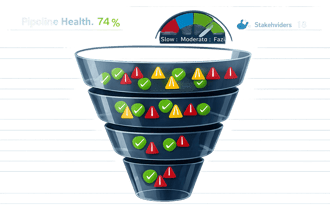
Start with a summary view showing total pipeline, weighted pipeline adjusted for stage probability and health score, and the gap between the two. Include your overall pipeline health score as a percentage and trend it over time.
Add a breakdown of pipeline by health status: healthy, warning, and critical. You want to see the proportion of healthy pipeline increasing over time as your quality initiatives take hold.
Quality by Channel Section
Show pipeline health score segmented by source channel. This reveals which channels produce quality opportunities and which pad the numbers with deals that don't convert.
Include conversion rates by channel: MQL-to-SQL, SQL-to-Opportunity, and Opportunity-to-Close. Quality channels show strong performance across all stages. Channels that look good on volume but fail on conversion need attention.
At-Risk Deals Section
Create a list view of deals below your quality threshold, sorted by deal value. For each deal, show the specific quality signals that are flagged. This gives your team a clear action list for the week.
Include a count of deals that have been in critical status for more than 14 days. These are candidates for immediate disposition. Keeping them in the pipeline damages your forecast accuracy and wastes sales attention.
Quality Trends Section
Track your key quality metrics over time: average health score, average time-in-stage, average stakeholder count, and average deal velocity. Look for trends that indicate whether your quality initiatives are working.
Set targets for each metric and track progress toward them. A dashboard without targets is just reporting. A dashboard with targets is a management tool that drives behavior.
Common Mistakes in Omnichannel Demand Generation
Most demand generation programs fail not because of bad strategy but because of execution errors. Understanding these common mistakes helps you avoid them in your own program.
Choosing Channels Based on Trends or Competitors
Many teams chase the latest channel because a competitor is using it or a thought leader recommended it. But channel effectiveness depends on your specific ideal customer profile, sales cycle, and average deal value. What works for a product-led SaaS company will not work for an enterprise software sale.
Select channels based on buyer behavior, deal dynamics, and where your specific audience spends time. Test new channels with controlled experiments before committing significant budget.
Driving Traffic to Generic Landing Pages
When your ad promises a specific solution but your landing page talks about your entire product suite, message continuity breaks. The prospect clicked because you addressed their specific need. Now they have to hunt for relevance. Most will leave.
Align intent, creative, and landing experience so every click feels consistent. Create dedicated landing pages for each campaign with messaging that matches the ad that drove the traffic.
Scaling Volume Without ICP Filters
When pressure mounts to hit pipeline numbers, teams often loosen qualification criteria to let more leads through. This solves the short-term problem while creating a bigger problem downstream: a pipeline full of deals that will never close.
Optimize for SQL rate and pipeline contribution, not cost per lead alone. A more expensive lead that converts is worth more than a cheap lead that doesn't.
Running Channels Without Coordination
When each channel operates with its own goals, metrics, and data, the result is fragmented experiences for buyers and incomplete data for marketers. Integration isn't optional in omnichannel demand generation. It's the definition.
Orchestrate messaging and retargeting so channels reinforce each other. A prospect who attends a webinar should receive follow-up that references the webinar, see related retargeting ads, and get sales outreach that builds on what they learned.
Step-by-Step: Building Your Omnichannel Demand Generation Program
Here is how to build an omnichannel demand generation program that improves pipeline quality, following the approach The Pedowitz Group uses with enterprise and mid-market B2B organizations.
Step 1: Define Your Ideal Customer Profile and Buying Committee
Start with absolute clarity about who you are trying to reach. Document your ideal customer profile: industry, company size, geography, and technology stack. Map the buying committee: who influences the decision, who evaluates options, who signs off.
This definition should be shared across marketing and sales. If the two teams have different ideal customer profiles in mind, every downstream activity will be misaligned.
Step 2: Map the Buyer Journey
Document how your buyers actually move from unaware to closed deal. Identify the questions they ask at each stage, the content they consume, and the channels they use. This map becomes the blueprint for your channel strategy.
Interview recent customers and lost opportunities. Review CRM data on touchpoints before close. Talk to sales about what they hear in discovery calls. The journey map should reflect reality rather than assumptions.
Step 3: Select and Prioritize Channels
Based on your ideal customer profile and journey map, identify which channels will reach buyers at each stage. Prioritize based on expected pipeline contribution and cost efficiency. Start with fewer channels done well rather than many channels done poorly.
For most B2B organizations, a starting mix includes one awareness channel, one capture channel, and one nurture channel. Add channels as you prove each one works.
Step 4: Build Your Lead Scoring Model
Design a scoring model that combines fit, engagement, and intent. Set thresholds for MQL and SQL status. Document the specific criteria and share them with sales.
If you have conversion data from past campaigns, use it to weight the model. If not, start with assumptions and commit to recalibrating after 90 days of data collection.
Step 5: Establish SLAs and Handoff Processes
Write down the agreement between marketing and sales. Define what qualifies a lead for handoff. Define response time requirements. Define how compliance will be tracked and reported.
Get sign-off from marketing and sales leadership. SLAs that leadership hasn't bought into will not be followed when pressure mounts.
Step 6: Implement Attribution and Reporting
Configure your technology stack to track touchpoints across the buyer journey and connect them to opportunity and revenue data. Choose an attribution model and apply it consistently.
Build dashboards that show pipeline quality metrics alongside volume metrics. Make sure leadership sees quality metrics in every pipeline review.
Step 7: Launch, Measure, and Optimize
Launch your initial campaigns. Monitor performance against pipeline targets rather than just activity metrics. Review weekly to identify what is working and what needs adjustment.
Optimization is ongoing. Expect to adjust channel mix, scoring thresholds, and SLAs as you learn from real conversion data.
How The Pedowitz Group Approaches Omnichannel Demand Generation
The Pedowitz Group has spent nearly two decades building demand generation programs that connect marketing activity to pipeline outcomes. The approach starts with diagnosis before designing solutions.
Starting With the RM6 Diagnostic
Every TPG demand generation engagement begins with an RM6 assessment. This 49-capability diagnostic evaluates your current state across strategy, people, process, technology, customers, and results. The assessment identifies the highest-impact gaps and sequences improvements in the right order.
Building advanced ABM programs before lead management works is a common mistake. So is implementing attribution models before data quality is stable. The RM6 diagnostic prevents these sequencing errors that waste budget and delay results.
Building Programs That Scale
The Pedowitz Group designs omnichannel demand programs with scalability in mind. This means documented processes, configured technology, trained teams, and measurement frameworks that work as volume increases.
Demand generation that requires heroic effort from individual contributors doesn't scale. The goal is a system that produces predictable pipeline month after month regardless of who is running the campaigns.
Connecting Channels to Pipeline With Revenue Marketing
The Pedowitz Group invented the Revenue Marketing category. The core principle is straightforward: marketing should be measured by revenue contribution, not activity metrics. This principle guides every aspect of how TPG designs and optimizes demand generation programs.
When you work with TPG on demand generation services, the engagement is structured around pipeline targets rather than campaign deliverables. Success is measured in qualified opportunities and influenced revenue.
In Conclusion: Building Pipeline Quality Into Your Demand Generation
Omnichannel demand generation isn't about being present on every channel. It's about coordinating channels to move buyers through a unified journey that ends with qualified pipeline. The organizations that do this well share three characteristics.
First, they start with the buyer. Channel selection, content strategy, and messaging all flow from a clear understanding of how their specific buyers research and purchase. They don't chase channels because competitors use them. They choose channels because buyers use them.
Second, they measure what matters. Pipeline quality metrics drive decisions. Activity metrics inform optimization but don't define success. When leadership asks about marketing performance, the answer is revenue contribution rather than clicks and impressions.
Third, they invest in alignment. Marketing and sales operate from shared definitions, shared data, and shared accountability. SLAs create the structure. Regular reviews maintain it. Both teams own the number together.
If your current demand generation program produces activity without producing pipeline that converts, the problem is likely one of the issues covered in this guide. Start by auditing your channel coordination, lead qualification consistency, and measurement approach. The path to better pipeline quality runs through operational discipline applied to every channel, every handoff, and every metric.
FAQs About Omnichannel Demand Generation and Pipeline Quality
What is the difference between omnichannel and multichannel demand generation?
Multichannel demand generation runs campaigns on multiple platforms independently. Omnichannel demand generation coordinates those platforms around a unified buyer journey with shared data and consistent messaging.
The practical difference shows up in buyer experience and data quality. The Pedowitz Group builds omnichannel programs that create smoother journeys and capture complete engagement history across touchpoints, enabling more accurate lead scoring and better pipeline quality measurement.
How do lead qualification SLAs improve pipeline quality?
Lead qualification SLAs create shared definitions of what constitutes a qualified lead and establish accountability for follow-up timing. They prevent the common problem where marketing and sales disagree about lead quality.
The Pedowitz Group builds SLA frameworks that connect directly to CRM and automation platforms for real-time visibility. When marketing and sales agree on criteria and enforce response times, fewer qualified leads fall through the cracks.
What metrics should you track for omnichannel demand generation?
Track MQL-to-SQL conversion rate, SQL-to-opportunity conversion rate, pipeline velocity, and marketing-sourced revenue share. These quality metrics matter more than volume metrics for understanding whether your program produces revenue.
The Pedowitz Group recommends closed-loop reporting that connects marketing activity to opportunity and revenue data so you can see which channels contribute to closed deals rather than just which channels generate the most activity.
How does lead scoring improve B2B pipeline quality?
Lead scoring assigns numerical values to contacts based on fit, engagement, and intent. This prioritization ensures sales focuses on leads most likely to convert while marketing nurtures those who need more development.
The Pedowitz Group designs scoring models calibrated to actual conversion data rather than assumptions. Quarterly recalibration keeps the model aligned with changing buyer behavior and market conditions.
What is closed-loop reporting in demand generation?
Closed-loop reporting connects marketing activity data in your automation platform to opportunity and revenue data in your CRM. This connection is required to measure which campaigns, channels, and content contribute to closed revenue rather than just pipeline creation.
Without closed-loop reporting, you can measure activity but not impact. The Pedowitz Group helps organizations build the data infrastructure required for meaningful attribution that drives smarter channel investment decisions.
How long does it take to see results from omnichannel demand generation?
Capture channels like paid search can show pipeline impact in 30 to 60 days. Creation channels like SEO require four to nine months for meaningful results. Most organizations see measurable improvement in pipeline quality within one quarter of implementing coordinated programs.
The timeline depends on your starting point. Organizations with existing infrastructure improve faster than those building from scratch. The Pedowitz Group's RM6 assessment helps identify where you are and what sequence of improvements will produce results fastest.