Most companies are using AI to cut costs. That is the wrong play.
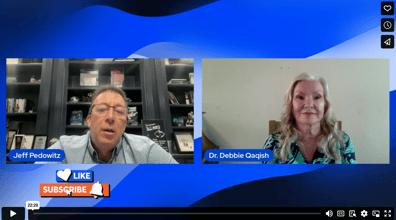
In this week's episode of Revenue Marketing Raw, Jeff Pedowitz and Dr. Debbie Qaqish dig into a bigger idea: AI is not a productivity tool. It is the new operating system for your entire business. And the companies treating it that way are the ones winning.
What Does "AI as an Operating System" Actually Mean?
An operating system is the layer that makes everything else run. It coordinates inputs, manages processes, and drives outputs across every function.
That is exactly what AI can do now.
Sales, marketing, finance, IT: every department has processes, systems, and decision points. AI can be inserted at each of those points to automate low-value tasks, sharpen intelligence, and free up humans for strategy, relationships, and judgment calls that actually move revenue.
The mistake most leaders make is stopping at efficiency. Efficiency has a short shelf life. It gets you six to twelve months. Then what?
The real question is: how do you reimagine the way your company works, from the ground up, with AI as the orchestrating layer?
The Sales Process Is the Best Place to Start
Jeff and Debbie focused the conversation on sales because this is where AI delivers immediate, personal impact, without waiting for IT or a company-wide rollout. Salespeople can start today.
Here is the AI-powered sales process they outlined:
Pre-call prep. AI builds a full brief before you get on the phone. It pulls the prospect's LinkedIn activity, company news, press releases, and career history. It develops a psychological profile and gives you the three questions you need to ask. It can even trigger automatically off your calendar so briefs arrive before you need them.
On the call. Record it. Get the transcript. Feed it into your AI workspace. Ask not just "what did they say" but "what did they really mean?" AI can identify the most pressing need, flag the questions you missed, and tell you how your pitch landed.
Post-call coaching. Rate yourself objectively. Give the AI your criteria for a great call and ask it to score you honestly. The default tendency of most AI tools is to be positive. Override that. You want it to push back. It should tell you what you missed, what you could have phrased better, where you lost the thread.
Multi-touch follow-up. Stop writing single follow-up emails. Build a dynamic sequence based on whether the prospect responds or not. Feed the transcript and each exchange back into the chat. Let the AI write the next move based on what the prospect actually said or did not say.
Proposal generation. Your LLM already knows everything you discussed. It knows how you sell and what you offer. With a good template, you can build a draft proposal in minutes, or even live on a screen share with the client.
Why Efficiency-Only Thinking Is a Missed Opportunity
Boards and PE firms keep asking: how much headcount can we cut?
That framing misses the point by a wide margin.
AI-driven efficiency is a floor, not a ceiling. Once you get the systems in place, the intelligence layer starts doing something more valuable: it helps you find new revenue streams, unlock new markets, and engage customers in ways you have not even conceived yet.
The companies winning right now are not the ones asking "how low can we go?" They are the ones asking "what becomes possible that wasn't before?"
Frequently Asked Questions
What does it mean to use AI as an operating system? It means embedding AI across every department and process in your business, not just as a tool for individual tasks but as the coordinating intelligence layer that improves decisions, automates workflows, and surfaces insights at scale.
Do salespeople need their company to implement AI tools before they can use them? No. Salespeople can start today using Claude, ChatGPT, or Copilot on their own. Building prospect chats with persistent memory, generating follow-up sequences, and creating call briefs are all things an individual rep can do right now, without waiting for a company rollout.
How can AI help with sales coaching? Feed your call transcript into an AI workspace along with your own scoring criteria for what a great call looks like. Ask it to rate you objectively and identify specific gaps. This works better than asking "how did I do?" because it grounds the feedback in your actual standards, not generic praise.
Is AI going to replace salespeople? No. The goal is to collapse the busy work so salespeople can be more present, ask better questions, and build more authentic relationships. Customers want to feel understood. AI gives you the intelligence to deliver that, but the human still has to show up and use it.
What is the biggest mistake companies make with AI right now? Treating it purely as a cost-cutting tool. Efficiency gains are real but limited. The bigger opportunity is using AI to grow revenue, enter new markets, and reimagine how the business operates end to end.
Where should a company start if they want to use AI as an operating system? Start with sales. It is the highest-leverage department for individual adoption, and the ROI is visible and fast. Once you prove the model there, the playbook applies to every other function.
Jeff Pedowitz is President and CEO of The Pedowitz Group. Dr. Debbie Qaqish is Partner and Chief Strategy Officer. Revenue Marketing Raw publishes weekly.