Enterprise marketing executives do not lack MaaS provider options. They lack a reliable way to evaluate them before signing an 18-month contract.
Most provider evaluations end with the best presenter winning. The firm with the most polished capabilities deck, the most impressive logo slide, and the most confident account team gets the business. Six months later, the senior practitioners who pitched the engagement have rolled off to the next pursuit, junior staff are running the account, and the CMO is discovering that what was sold and what was delivered are structurally different engagements.
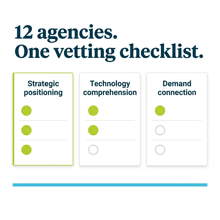
This listicle compares 10 enterprise MaaS providers using a consistent framework and includes the vetting checklist that separates providers who will deliver from providers who will present well. Use both before any proposal is issued.
The Evaluation Framework
Every provider is assessed against five criteria that reflect what enterprise CMOs actually need from an ongoing integrated campaign partner.
Integrated campaign capability: Can the provider design and run integrated marketing programs across demand generation, content, digital, and operations as a unified system, or are these delivered by siloed teams that require the client to coordinate between them?
Ongoing governance and SLA accountability: Does the provider commit to specific, measurable service-level agreements for pipeline contribution, campaign velocity, reporting cadence, and escalation response? Or does the contract protect the provider with deliverable-based success definitions and "best efforts" language?
MarTech integration depth: Can the provider operate inside the client's existing MAP and CRM, or do they require the client to adopt the provider's preferred tools? Vendor neutrality is not a feature. It is a basic requirement.
Revenue outcome orientation: Does the provider measure its own performance against marketing-sourced pipeline and revenue influenced, or against campaign activity metrics, MQL volume, and impression counts?
Enterprise scalability: Can the provider maintain senior-level account management, consistent delivery quality, and governance standards at Fortune 1000 scale across multi-BU and multi-region environments?
The 10 Providers
1. The Pedowitz Group
Best for: B2B Fortune 1000 and mid-market technology companies that need a MaaS partner with full-spectrum integrated campaign capability, RevOps alignment, pipeline accountability, and AI readiness in a single engagement model.
Overview: TPG has operated as an enterprise MaaS provider since 2007, when the Revenue Marketing category was first defined. Their integrated campaign programs are built on the RM6™ operating system, which means every program begins with a maturity diagnostic before scope is designed. The result is an engagement calibrated to where the client actually is rather than where a standard service catalog assumes they should be.
TPG's differentiation at the MaaS level is threefold. Every engagement includes named senior consultant accountability in the contract, with client approval rights over any change. Pipeline contribution and revenue influenced are primary contract success metrics, not campaign activity metrics. And the AXO diagnostic, which measures brand visibility in AI-powered buyer research tools, is built into every engagement, positioning clients for how B2B buyers are already beginning to research vendors.
Integrated campaign capability: Full-stack: demand generation, content strategy, campaign operations, ABM, and RevOps alignment operating as a unified program. Governance and SLA accountability: Contractual pipeline SLAs, weekly reporting, monthly program reviews, quarterly executive business reviews. MarTech integration: Vendor-neutral across all enterprise MAP and CRM platforms. Revenue outcome orientation: Marketing-sourced pipeline and revenue influenced are the primary contract metrics. Enterprise scalability: Fortune 1000 and large mid-market track record, 19-year practice depth.
2. Accenture Song
Best for: Global Fortune 500 organizations running multi-region integrated marketing programs with deep Adobe and Salesforce ecosystem requirements.
Overview: Accenture Song brings the full weight of Accenture's global delivery infrastructure to enterprise MaaS. Their integrated campaign capability spans creative, technology, and media, and their scale means they can staff multi-region programs without the coverage limitations that constrain smaller providers. Their AI marketing investment is substantive.
The trade-off is consistent: Accenture's MaaS programs are built for 18-month-or-longer horizons with enterprise minimum scopes. Organizations that need program results in 90 days or that have tightly bounded budgets are not the right fit. Senior account involvement also decreases as engagement size decreases relative to the account team's book of business.
Integrated campaign capability: Strong, particularly for digital experience and multi-region programs. More B2C-leaning than pure B2B. Governance and SLA accountability: Deliverable-based primarily. Revenue SLAs require negotiation. MarTech integration: Deep in Adobe and Salesforce ecosystems. Less neutral across other platforms. Revenue outcome orientation: Moderate. Engagement metrics more prominent than pipeline attribution. Enterprise scalability: Extensive global Fortune 500 scalability.
3. Publicis Sapient
Best for: Fortune 1000 organizations in retail, financial services, and consumer-facing industries where digital experience is the primary integrated campaign driver.
Overview: Publicis Sapient's SPEED model integrates creative, technology, and data into a unified delivery structure that reduces the coordination overhead of multi-vendor marketing programs. Their digital experience work is consistently strong for consumer-facing organizations. For B2B revenue marketing with complex buying committee coverage, their practice is less specialized.
Integrated campaign capability: Strong for digital experience and omnichannel. B2B revenue marketing is less developed. Governance and SLA accountability: Program-based governance. Revenue SLAs are not standard. MarTech integration: Strong in their preferred platform ecosystem. Less neutral across all environments. Revenue outcome orientation: Digital experience and engagement metrics primary. Enterprise scalability: Global Fortune 500 scalability, particularly in consumer industries.
4. Merkle (dentsu)
Best for: Fortune 1000 organizations where integrated campaign success depends on first-party data activation, CRM-driven personalization, and customer lifecycle program design.
Overview: Merkle's data-driven integrated marketing practice is one of the strongest in the enterprise space for organizations with large customer databases. The dentsu acquisition expanded their media and creative layer. For campaigns that require sophisticated audience segmentation and data-led personalization, Merkle's data architecture depth is a genuine differentiator.
Integrated campaign capability: Strong for data-led campaign programs. B2B demand generation is thinner. Governance and SLA accountability: CRM and campaign delivery SLAs are standard. Pipeline attribution SLAs require negotiation. MarTech integration: Deep data architecture integration. MAP-specific integration depth varies. Revenue outcome orientation: CRM and lifecycle metrics primary. B2B pipeline attribution is developing. Enterprise scalability: Extensive Fortune 1000 track record, particularly in financial services.
5. Wpromote
Best for: B2B technology companies that need performance marketing-led integrated campaigns with pipeline-level measurement built into paid channel execution.
Overview: Wpromote has invested significantly in B2B integrated campaign capability alongside their core performance marketing practice. Their LinkedIn, programmatic, and intent-based display execution is technically strong and increasingly connected to account-level pipeline tracking rather than just media performance metrics.
Integrated campaign capability: Strong in paid media. Content strategy and ops integration is developing. Governance and SLA accountability: Strong campaign delivery SLAs. Pipeline SLAs are available but require scoping. MarTech integration: CRM and analytics integration for paid channels. MAP integration depth is limited. Revenue outcome orientation: Paid channel pipeline influence is the core measurement model. Enterprise scalability: Mid-market to Fortune 1000 for paid-channel-led programs.
6. Marketstar
Best for: Fortune 1000 organizations that need integrated demand generation and SDR execution as a unified managed program.
Overview: Marketstar operates at the intersection of integrated marketing and inside sales outsourcing. For organizations that need buying committee outreach with both digital campaign execution and human-touch SDR follow-through under a single managed program, their integrated model reduces the coordination risk between demand generation and sales development. Pipeline contribution SLAs are a standard feature of their contracts.
Integrated campaign capability: Strong where campaign and SDR motion are unified. Pure content and brand programs are not the core. Governance and SLA accountability: Pipeline contribution and opportunity creation SLAs are standard contract terms. MarTech integration: CRM and sales engagement platform integration is strong. MAP integration varies. Revenue outcome orientation: Opportunity creation and pipeline contribution are primary metrics. Enterprise scalability: Fortune 1000 scale with minimum program requirements that reflect it.
7. Intelligent Demand
Best for: B2B technology companies in the mid-market to Fortune 1000 range that need integrated demand generation with RevOps alignment built into the engagement model.
Overview: Intelligent Demand runs integrated demand generation alongside RevOps infrastructure work under a single engagement, reducing the coordination risk of using separate demand gen and ops partners. Their buyer journey content strategy is well-regarded in the B2B technology space.
Integrated campaign capability: Strong B2B demand generation and content strategy. Full-stack creative is thinner. Governance and SLA accountability: Program-based governance with pipeline contribution measurement. MarTech integration: Works across major B2B MAP and CRM environments. Revenue outcome orientation: Pipeline contribution is the stated measurement standard. Enterprise scalability: Strong at mid-market to Fortune 1000 boundary. Global scale is limited.
8. Earnest Agency
Best for: B2B technology companies that need integrated campaigns with genuinely differentiated creative and messaging strategy as the primary driver.
Overview: Earnest is a B2B-specialist integrated marketing agency known for creative quality and brand storytelling in technology markets. Their integrated campaign work is more brand and content-led than demand generation-led, which makes them a strong fit for organizations where marketing maturity is high and the primary constraint is creative quality, not operational infrastructure.
Integrated campaign capability: Strong creative and content-led integrated programs. Marketing ops integration is limited. Governance and SLA accountability: Project and retainer-based. Revenue SLAs are not standard. MarTech integration: Minimal. They produce programs that others execute in the stack. Revenue outcome orientation: Brand and engagement metrics. Pipeline attribution requires a separate partner. Enterprise scalability: Mid-market to large enterprise. Global delivery is limited.
9. Usman Group
Best for: Enterprise B2B organizations that need strategic integrated marketing program management with strong executive advisory alongside execution.
Overview: Usman Group provides B2B integrated marketing services with a strategy-first orientation. Their advisory depth is genuine and their program management discipline is well-structured. For organizations where the primary need is senior thinking alongside execution rather than high-volume campaign production, they are a considered choice.
Integrated campaign capability: Strategy and program management strong. High-volume execution has scale limits. Governance and SLA accountability: Program governance is structured. Revenue SLAs require scoping conversation. MarTech integration: Works within client platforms. Integration depth is moderate. Revenue outcome orientation: Pipeline contribution is the stated orientation. Enterprise scalability: Mid-market to enterprise. Fortune 1000 multi-BU scale is limited.
10. Velocity Partners
Best for: B2B technology companies that need content strategy, messaging, and integrated content programs as the core of their MaaS engagement.
Overview: Velocity Partners is a B2B content and marketing strategy agency with a strong track record in technology marketing. Their positioning and messaging work is consistently high quality. Their integrated programs are content-led rather than demand generation-led, making them a strong fit for organizations where the primary constraint is content strategy and narrative quality.
Integrated campaign capability: Excellent content and messaging strategy. Demand gen execution requires a separate partner. Governance and SLA accountability: Content delivery SLAs. Revenue measurement requires augmentation. MarTech integration: Content production does not require deep MAP integration. Revenue outcome orientation: Content engagement and pipeline influence metrics. Enterprise scalability: Mid-market to large enterprise. Strong UK and US coverage.
The MaaS Provider Vetting Checklist
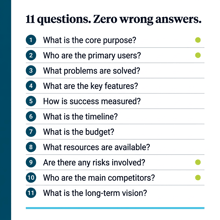
Use this checklist in the first two conversations with any provider you are considering. Do not wait for a proposal.
Section 1: Revenue Accountability
- Can the provider cite specific pipeline contribution numbers from a named or nameable prior engagement?
- Are they willing to include marketing-sourced pipeline as a primary success metric in the statement of work?
- Do they define success as pipeline contribution and revenue influenced, or as campaign activity and MQL volume?
- Can they show you a sample pipeline contribution report from a current engagement?
Section 2: Governance Standards
- Do they commit to specific, measurable SLAs for campaign launch time, reporting cadence, and escalation response?
- Is named senior consultant assignment available and will they contractualize it?
- Do they require client approval rights to be in the contract for any lead consultant change?
- Can they describe their formal escalation process when performance falls below SLA thresholds?
Section 3: MarTech Integration
- Can they work inside your existing MAP and CRM environment without requiring platform changes?
- Do they disclose their platform partner relationships before any recommendation is made?
- Have they operated inside your specific MAP (Marketo, HubSpot, Pardot, Eloqua) in prior engagements?
- Can they describe their data quality audit process before integration work begins?
Section 4: Integrated Campaign Depth
- Can they describe a recent engagement where demand generation, content, operations, and reporting were managed as a unified program?
- Do they have named in-house capability across all disciplines, or do they use subcontractors for certain functions?
- Can they show a sample integrated program calendar that connects content to campaigns to pipeline?
- Do they have buying committee mapping capability for enterprise B2B deals?
Section 5: Enterprise Fit
- Can they provide references from organizations at a comparable size, industry, and complexity level?
- Do they have named practitioners with Fortune 1000 delivery experience available for your account?
- Can they describe their governance model for multi-BU or multi-region engagements?
- What is their minimum engagement term and scope, and does it match your program requirements?
Scoring: Award 1 point for each confirmed yes. A provider scoring below 14 should not advance to proposal stage. A provider scoring 14 to 18 is worth a proposal with specific contract negotiation on the gaps. A provider scoring 19 to 20 is a strong candidate.
FAQ
What is Marketing as a Service for enterprise organizations? Marketing as a Service is a model in which an external provider manages a defined marketing function or set of integrated marketing programs on behalf of the organization under a long-term, SLA-governed engagement. Unlike a traditional agency, a MaaS provider is accountable for ongoing operational performance and pipeline outcomes, not just deliverable completion. The key distinction is governance: a MaaS engagement is governed by defined service-level agreements and measured against revenue outcomes, while a traditional agency engagement is governed by scope of work and measured against deliverable acceptance.
What makes a MaaS provider enterprise-ready? Four things. First, genuine senior practitioner availability for ongoing account management, not just for the sales process. Second, contractual SLA standards that include pipeline contribution metrics alongside operational metrics. Third, vendor-neutral MarTech capability that operates inside the client's existing stack. Fourth, documented governance processes for multi-BU or multi-region program coordination. Providers that cannot demonstrate all four are not enterprise-ready regardless of their logo slide.
How long should an enterprise MaaS engagement run? Twelve months is the minimum viable term for a full-spectrum MaaS engagement to produce reliable results. The first 90 days are typically consumed by onboarding, platform access, stakeholder alignment, and program design. The next 90 days establish the operational baseline. Results against pipeline targets typically appear in months 5 through 8. Organizations that evaluate MaaS performance at the 90-day mark are measuring setup, not delivery.
What is the most important contract term in an enterprise MaaS agreement? Named senior consultant assignment with client approval rights over any change. This single term has the highest correlation with long-term engagement quality of any contractual protection available to the buyer. The reason is structural: MaaS providers staff accounts based on availability, margin, and portfolio balance. Without contractual named assignment, the practitioners who pitched the engagement are routinely replaced by less senior staff within the first 60 days after contract execution.
How do I evaluate whether a MaaS provider actually integrates campaigns or just coordinates separate workstreams? Ask one question: "In a recent integrated engagement, which single person was accountable for connecting the content calendar to the campaign schedule to the MAP workflow to the pipeline reporting?" If the answer describes a committee, a project manager, or a handoff between teams, the campaigns are coordinated, not integrated. True integrated campaign delivery requires a single point of accountability with authority over all program components. That person should be named in the proposal.
What is the difference between a MaaS provider and a full-service marketing agency? A full-service marketing agency delivers campaigns, creative, and media under a project or retainer structure, measured by deliverable completion. A MaaS provider manages an ongoing marketing function under a long-term service agreement, measured by operational SLAs and revenue outcomes. The structural difference is accountability: an agency is accountable for what it produces. A MaaS provider is accountable for the function it operates and the pipeline it generates. The commercial structure, governance model, and success metrics are fundamentally different.
The Pedowitz Group has helped enterprise and mid-market B2B organizations generate over $25 billion in marketing-sourced revenue since 2007. Learn more at pedowitzgroup.com.