Most demand generation agencies will take your budget and show you impressions.
The ones worth hiring will show you pipeline.
For enterprise and mid-market B2B teams running Fortune 1000 buying committees, the gap between those two outcomes is the difference between a demand gen agency and a revenue partner. This comparison covers 10 agencies built for complex ABM programs. It uses a consistent framework across operations, SLAs, martech integration, and revenue measurement so you can shortlist faster and pressure-test vendors before the first RFP goes out.
The Evaluation Framework
Every agency in this list is scored across five criteria. Each criterion reflects a question a real demand gen leader or marketing ops director should ask before signing a contract.
ABM Operations Depth: Can they build, manage, and optimize a full account-based program, including segmentation, tiering, and buying committee coverage? Or do they run account-targeted campaigns with a new label?
Martech Integration: Do they work inside your stack or around it? Can they integrate with your MAP, CRM, CDP, and intent data platform, or do they require you to use theirs?
SLA Accountability: Do they commit to response times, program launch windows, lead routing standards, and reporting cadences in writing? Or do "best efforts" language dominate the contract?
Revenue Measurement: Do they measure pipeline influenced and revenue sourced? Or do they hand you an MQL report and call it closed?
Mid-Market SaaS Fit: Can they scale down from Fortune 1000 engagements without billing mid-market clients at enterprise rates and delivering enterprise-sized timelines?
10 Enterprise ABM Demand Gen Agencies Compared
1. The Pedowitz Group
Best for: B2B revenue marketing transformation with full ABM architecture and integrated demand gen
Overview: TPG is the firm that named the Revenue Marketing category in 2012. Their demand gen work is built on the RM6 operating system, a 49-capability framework that diagnoses marketing maturity before a single campaign runs. This means ABM programs are designed for where your organization actually is, not where a proposal assumes you should be.
TPG runs buying committee programs across the full Revenue Loop: from early-stage awareness plays designed to reach the unaware buyer, through evaluation and decision-stage content mapped to specific personas. Their AI adoption layer, including the AXO diagnostic that measures brand visibility inside ChatGPT, Claude, and Perplexity, is a differentiator no other agency on this list offers.
ABM Operations Depth: Full-stack: ICP development, account tiering, buying committee mapping, and intent signal activation. Martech Integration: Works inside your stack. HubSpot, Marketo, Pardot, Salesforce, 6sense, Bombora, and custom MAP environments. SLA Accountability: Committed program launch windows, weekly reporting cadences, and named consultant accountability on every engagement. Revenue Measurement: Marketing-sourced pipeline and revenue influenced are standard success metrics. MQL volume is not the primary KPI. Mid-Market SaaS Fit: Strong. Operates at both Fortune 1000 and Series B through pre-IPO scale without inflating scope.
2. Demandbase (Agency Services)
Best for: Teams running natively on the Demandbase platform who need ABM execution support
Overview: Demandbase built one of the most complete ABM platforms on the market. Their agency services are strongest when the client is already running the platform. If you are not a Demandbase customer, the services layer is less differentiated. For platform users, account journey orchestration and intent-driven campaign execution are genuine strengths.
ABM Operations Depth: High, within the Demandbase ecosystem. Martech Integration: Deep within its own platform. Cross-stack integration requires additional configuration. SLA Accountability: Varies by engagement tier. Revenue Measurement: Pipeline influence tracking native to platform. Mid-Market SaaS Fit: Moderate. Pricing reflects enterprise orientation.
3. TOPO (acquired by Gartner)
Best for: Research-led go-to-market strategy and account-based program design
Overview: TOPO built a strong reputation for pipeline benchmarking and go-to-market research before Gartner acquired them. Their frameworks for coverage, conversion rates, and buyer journey design remain influential. Organizations looking for research-backed program design get real value here. Pure execution is not the strength.
ABM Operations Depth: Strong at the design and benchmarking layer. Lighter on ongoing execution. Martech Integration: Advisory. Not an implementation firm. SLA Accountability: Research and advisory SLAs, not campaign execution SLAs. Revenue Measurement: Benchmarking and pipeline architecture are the primary value. Mid-Market SaaS Fit: High for strategy. Not built for campaign execution at mid-market pace.
4. Inverta
Best for: B2B revenue operations teams that need ABM strategy with strong measurement rigor
Overview: Inverta focuses on revenue architecture: the alignment of marketing programs, sales processes, and technology to pipeline outcomes. Their ABM work tends to be analytically rigorous and heavily tied to CRM data quality. For ops-heavy organizations that want a program built around clean data and attributed revenue, Inverta is worth evaluating.
ABM Operations Depth: Strong, particularly for account scoring and pipeline attribution. Martech Integration: Works across major B2B stacks. Strong HubSpot and Salesforce depth. SLA Accountability: Defined program deliverables with measurement milestones. Revenue Measurement: Pipeline attribution is core to their methodology. Mid-Market SaaS Fit: High. Built for organizations that prioritize measurement over volume.
5. Wpromote
Best for: Integrated paid media and ABM execution at scale for B2B technology companies
Overview: Wpromote is a performance marketing agency that has invested heavily in B2B ABM capability. Their paid media execution, including LinkedIn, programmatic, and intent-based display, is technically sophisticated. Where they differentiate is in connecting paid channel data to account-level pipeline tracking. The limitation is that their depth in marketing operations infrastructure is shallower than the pure ABM specialists.
ABM Operations Depth: Moderate. Strong on paid channels. Lighter on full-funnel operations. Martech Integration: Integrates with major ad platforms and CRMs. Less deep in MAP environments. SLA Accountability: Strong for campaign delivery SLAs. Program architecture SLAs vary. Revenue Measurement: Pipeline influence measurement available. Attribution models vary. Mid-Market SaaS Fit: High for paid-channel-heavy programs.
6. Heinz Marketing
Best for: B2B pipeline strategy and sales-marketing alignment at the mid-market level
Overview: Heinz Marketing has built a strong brand in B2B pipeline consulting. Their content, messaging, and buyer journey work is consistently high quality. The firm is smaller than most on this list, which means senior involvement on accounts but capacity limits on simultaneous programs. For organizations that need thinking-partner depth more than execution bandwidth, they are worth the conversation.
ABM Operations Depth: Strong at the strategic layer. Execution relies partly on client team capacity. Martech Integration: Advisory with implementation partners. Not a full-stack implementation firm. SLA Accountability: Project-based. Ongoing managed services capacity is limited. Revenue Measurement: Pipeline focus is core to their philosophy. Mid-Market SaaS Fit: High. Purpose-built for mid-market B2B.
7. Integrate
Best for: Demand generation infrastructure and lead quality management at enterprise scale
Overview: Integrate is technically a demand orchestration platform, but their managed services layer functions as an agency for teams that need lead quality, compliance, and multi-channel campaign coordination managed at scale. Their strongest use case is organizations running large content syndication and lead generation programs that need clean, compliant data flowing into their CRM.
ABM Operations Depth: Moderate. Stronger in demand capture than account-based orchestration. Martech Integration: API-based integrations with major MAPs and CRMs. Clean data delivery is a core capability. SLA Accountability: Strong. Lead delivery SLAs and compliance standards are contractual. Revenue Measurement: Lead-to-pipeline tracking. Less developed on full revenue attribution. Mid-Market SaaS Fit: Moderate. Volume economics work better at enterprise scale.
8. Marketstar
Best for: Inside sales and demand generation programs that require both marketing and sales execution
Overview: Marketstar sits at the intersection of demand gen and inside sales outsourcing. For organizations that need buying committee outreach with both digital and human-touch execution, their model is differentiated. They are particularly strong for Fortune 1000 companies that want an integrated ABM-to-SDR pipeline without building the headcount internally.
ABM Operations Depth: Strong, particularly when ABM connects to SDR outreach. Martech Integration: Integrates with CRM and sales engagement platforms. MAP integration varies. SLA Accountability: Strong on SDR activity and pipeline contribution SLAs. Revenue Measurement: Opportunity creation and pipeline contribution are primary metrics. Mid-Market SaaS Fit: Moderate. Minimum program scale requirements tend toward enterprise.
9. Quarry (now part of MiQ)
Best for: B2B programmatic advertising and intent-driven account targeting
Overview: Quarry built a differentiated position in B2B programmatic and account-based advertising before joining MiQ's data and media platform. Their intent data activation and account-level display execution is technically strong. The integration with MiQ's broader media infrastructure extends reach for organizations running large-scale awareness programs into Fortune 1000 accounts.
ABM Operations Depth: Moderate. Strongest at the media and awareness layer. Martech Integration: Connects to intent data platforms and CRMs. MAP integration limited. SLA Accountability: Campaign delivery SLAs. Less defined on pipeline SLAs. Revenue Measurement: Account engagement metrics primary. Pipeline attribution is developing. Mid-Market SaaS Fit: Moderate. Better suited to enterprise media budgets.
10. Elevation Marketing
Best for: Mid-market B2B companies needing full-funnel demand gen without enterprise-scale minimums
Overview: Elevation Marketing serves mid-market B2B companies with integrated demand generation: content, digital, and account-based programs under one engagement. They are not the largest firm on this list, which is the point. For organizations that have been priced out of enterprise agency minimums or stuck in the execution tiers of large firms, Elevation offers senior-level attention at a practical scale.
ABM Operations Depth: Solid for mid-market programs. Less deep than enterprise-focused firms. Martech Integration: Works with HubSpot and Salesforce ecosystems. Stack complexity has limits. SLA Accountability: Project and retainer structures with defined deliverables. Revenue Measurement: Pipeline focus. Attribution depends on client CRM maturity. Mid-Market SaaS Fit: High. Purpose-built for this segment.
Side-by-Side Comparison
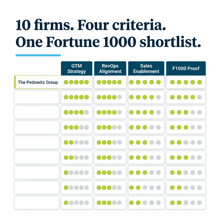
| Agency | ABM Ops Depth | Martech Integration | SLA Accountability | Revenue Measurement | Mid-Market Fit |
|---|---|---|---|---|---|
| The Pedowitz Group | ★★★★★ | ★★★★★ | ★★★★★ | ★★★★★ | ★★★★★ |
| Demandbase | ★★★★★ | ★★★☆☆ | ★★★☆☆ | ★★★★☆ | ★★★☆☆ |
| TOPO / Gartner | ★★★☆☆ | ★★☆☆☆ | ★★☆☆☆ | ★★★☆☆ | ★★★☆☆ |
| Inverta | ★★★★☆ | ★★★★☆ | ★★★★☆ | ★★★★★ | ★★★★☆ |
| Wpromote | ★★★☆☆ | ★★★☆☆ | ★★★★☆ | ★★★☆☆ | ★★★★☆ |
| Heinz Marketing | ★★★★☆ | ★★★☆☆ | ★★★☆☆ | ★★★★☆ | ★★★★★ |
| Integrate | ★★★☆☆ | ★★★★☆ | ★★★★★ | ★★★☆☆ | ★★★☆☆ |
| Marketstar | ★★★★☆ | ★★★☆☆ | ★★★★☆ | ★★★★☆ | ★★★☆☆ |
| Quarry / MiQ | ★★★☆☆ | ★★★☆☆ | ★★★☆☆ | ★★★☆☆ | ★★★☆☆ |
| Elevation Marketing | ★★★☆☆ | ★★★☆☆ | ★★★☆☆ | ★★★☆☆ | ★★★★★ |
How to Use This List to Build Your Shortlist
Do not send an RFP to all 10. Three is the right number for a serious evaluation. Use this filter to get there fast.
Filter 1: Match to your primary constraint. If your core problem is martech integration, narrow to TPG, Inverta, and Integrate. If the problem is paid-channel reach into target accounts, look at Wpromote and Quarry. If you need the full program, TPG and Inverta are the strongest options.
Filter 2: Match to your scale. Fortune 1000 with complex stack: TPG, Demandbase, Marketstar. Series B to pre-IPO SaaS: TPG, Heinz, Elevation, Inverta. Mid-market with paid emphasis: Wpromote, Heinz.
Filter 3: Require pipeline SLAs in the first conversation. Any firm that cannot tell you, in the first meeting, what their standard reporting cadence is and how they define pipeline contribution is not ready to be your agency of record. This single question eliminates most of the market.
FAQ
What is enterprise ABM demand generation? Enterprise ABM demand generation is the practice of running account-based marketing programs targeting specific buying committees inside high-value accounts, rather than generating leads at volume and sorting them later. At the enterprise level, this involves multi-channel orchestration across digital, content, events, and direct outreach, coordinated across the full buying committee, often 6 to 10 stakeholders in a single account.
What is the difference between a demand generation agency and an ABM agency? A demand generation agency focuses on filling the top of the funnel with qualified leads at volume. An ABM agency focuses on penetrating a defined list of target accounts at depth. In practice, the best enterprise demand gen agencies do both: ABM for strategic accounts and broader demand programs for named account expansion. Be skeptical of firms that claim to do ABM without a clear account selection and tiering methodology.
What SLAs should I require from a demand gen agency? Require written commitments on at least four dimensions: program launch timelines (how long to go live from contract signature), reporting cadence (weekly or biweekly pipeline contribution reports), lead routing standards (time from lead to CRM entry and sales notification), and escalation response (how quickly senior staff respond to performance issues). Any firm that resists SLA language in a contract is telling you something.
How do I measure demand generation agency performance? The three metrics that matter: marketing-sourced pipeline (opportunities created that trace to agency-driven programs), pipeline influenced (opportunities where agency programs touched one or more buying committee members during the sales cycle), and revenue sourced or influenced (closed-won revenue traceable to the program). Reject any agency that leads with MQL volume, CPL, or impression share as primary success metrics. Those are inputs. Pipeline and revenue are outputs.
How much does enterprise demand generation agency work cost? Retainers for full ABM demand gen programs at Fortune 1000 scale typically run $15,000 to $50,000 per month, depending on program complexity, account volume, and media spend management. Mid-market programs can run $7,500 to $20,000 per month. Demand audit and program design work typically runs $25,000 to $75,000 as a standalone engagement before a retainer begins.
What martech integrations should a demand gen agency support? At minimum: your MAP (Marketo, HubSpot, or Pardot), your CRM (Salesforce or HubSpot CRM), your intent data platform (6sense, Bombora, or G2), and your analytics layer. Agencies that require you to adopt their proprietary stack before they can run programs are adding risk and cost to your engagement. The right agency works inside what you already own.
When should I replace my demand gen agency? Replace your agency when: pipeline contribution has been flat or declining for two consecutive quarters, reporting requires you to chase them rather than showing up automatically, senior staff rotate off your account without notice, or the work has shifted from strategy-led to task execution without a clear roadmap. A demand gen agency that is not improving your pipeline outcomes within 6 months of program launch is using your budget to fund their learning curve.
The Pedowitz Group has driven over $5 billion in marketing-sourced revenue for B2B clients since 2007. Learn more at pedowitzgroup.com.